
Table of Contents
- What Drives the Price of Organic Cotton Christian Apparel
- The Benefits of Organic Cotton Clothing for Skin and Comfort
- Durability and Garment Longevity: Does Organic Cotton Last Longer?
- Cost-Per-Wear: The Real Math Behind the Price Premium
- How to Care for Organic Cotton T-Shirts So They Last
- Ethical Christian Clothing Brands: What to Look For
- Environmental Impact and End-of-Life: The Full Lifecycle
- Frequently Asked Questions
Last Updated: September 23, 2026
What Drives the Price of Organic Cotton Christian Apparel
If you have ever picked up a Christian tee at a big-box store, then flipped over the tag on an organic cotton piece from Saved, not finished and wondered why the numbers look so different, the answer is not marketing fluff. It is farming, certification, and traceability. This guide breaks down is organic cotton christian apparel worth the price by looking at what actually sits behind the tag.
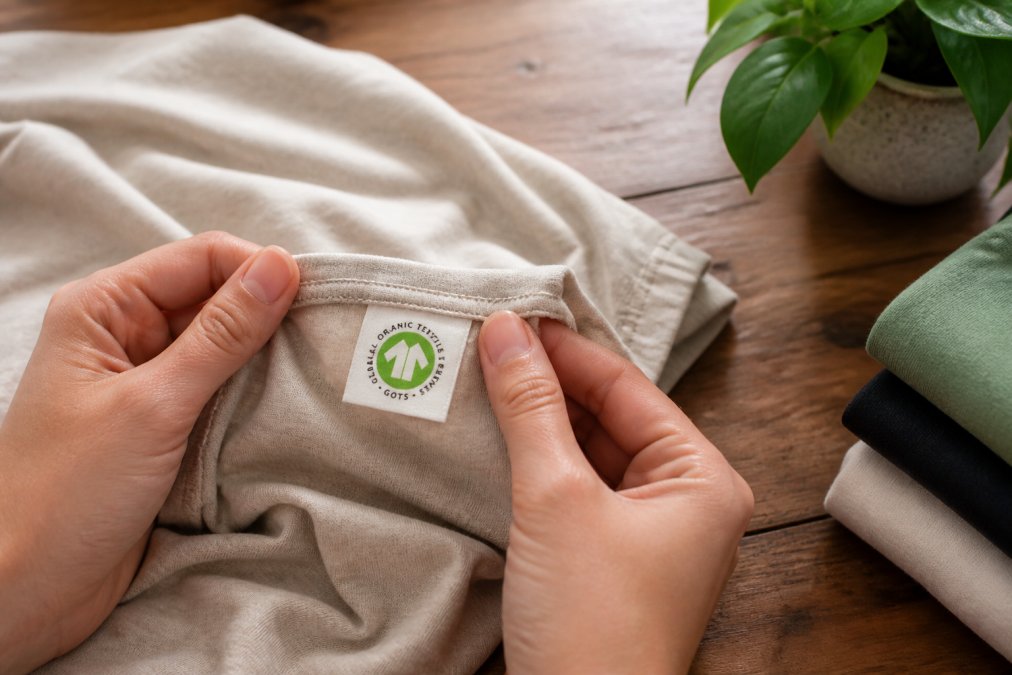
The short answer: organic cotton costs more because it is harder to grow, harder to certify, and harder to trace. Whether that premium is worth it depends on how you wear the garment and what you value.
Pesticide-Free Farming and GMO-Free Seeds
Conventional cotton is one of the most pesticide-intensive crops grown anywhere. Organic farming replaces synthetic chemicals with crop rotation, beneficial insects, and manual weed control, which raises labor costs and lowers yield per acre. Those higher production costs pass directly to the finished shirt.
Organic cotton is cotton grown without synthetic pesticides or genetically modified organisms, using methods that protect soil health and water conservation.
Certification Costs and Supply Chain Transparency
Certification is not free. Farms, gins, mills, and cut-and-sew factories all pay to be audited, and each link in the chain must stay separated from conventional cotton. That chain-of-custody work is what makes supply chain transparency possible.
The Benefits of Organic Cotton Clothing for Skin and Comfort
For anyone with skin sensitivity, the benefits of organic cotton clothing go beyond ethics. Organic cotton is grown and processed without the synthetic chemicals and toxic dyes used in much conventional textile manufacturing, which means fewer residue risks against your skin.
Breathability, Softness, and Hypoallergenic Properties
Organic cotton is a natural fiber with the same breathability as conventional cotton, but it is often softer because the fibers are not stripped by harsh chemical finishing. That softness holds up over time instead of washing out after a few cycles.
Durability and Garment Longevity: Does Organic Cotton Last Longer?
Organic cotton does not automatically last longer than conventional cotton, but it often does in practice. The reason is fiber length: organic farming tends to preserve longer staple fibers, and longer fibers resist pilling and thinning better than short ones. Fiber length is measured in staple length, and longer staples mean fewer fiber ends work their way to the surface and pill off.
| Factor | Cheaper Conventional Tee | Quality Organic Tee |
|---|---|---|
| Fiber length | Often short staple | Typically longer staple |
| Fabric weight | Light, thin | Mid to heavy |
| Seam construction | Single-stitch | Double-stitch |
| Colorfastness | Fades fast | Holds color longer |
| Typical lifespan | Months of regular wear | Years of regular wear |
How to Judge Durability Before You Buy
You cannot feel staple length through a product photo, so use these proxies instead:
- Fabric weight (GSM). Grams per square meter is the single best durability signal. A lightweight tee runs roughly 140-160 GSM; a midweight tee runs about 180-200 GSM; a heavyweight tee runs 220 GSM and up. Heavier fabric resists thinning and holds its shape longer.
- Seam type. Double-stitched or taped shoulder seams outlast single-stitch construction, which is the first place a cheap tee fails.
- Knit density. Hold the fabric up to light. If you can see through it easily, it will pill and thin faster.
- Ribbing at the neck. A reinforced collar with a higher percentage of spandex or elastane holds its shape instead of stretching out.
Cost-Per-Wear: The Real Math Behind the Price Premium
Cost-per-wear is the price of a garment divided by how many times you actually wear it. A shirt you wear 100 times at a higher upfront price can cost less per wear than a cheap shirt you wear 15 times before it fades.
Cost-Per-Wear: The Real Math Behind the Price Premium
Cost-per-wear is the price of a garment divided by how many times you actually wear it. A shirt you wear 100 times at a higher upfront price can cost less per wear than a cheap shirt you wear 15 times before it fades.
How to Care for Organic Cotton T-Shirts So They Last
Learning how to care for organic cotton t-shirts is simple, and it is the difference between a garment that lasts two seasons and one that lasts five. Organic cotton is durable, but heat and harsh detergent will still break it down.
- Wash cold on a gentle cycle to protect fibers and color
- Turn shirts inside out before washing to reduce surface abrasion
- Skip the dryer or use low heat; high heat causes shrinkage and pilling
- Use a mild, dye-free detergent to preserve softness
- Air-dry flat or hang in shade to avoid sun fading
- Store folded rather than on hangers to keep the neckline shape
Ethical Christian Clothing Brands: What to Look For
Ethical christian clothing brands share a few markers: verified certification, fair labor practices, and a willingness to show you where the garment was made. Ethical production is not a slogan you print on a hangtag; it is a paper trail you can check.
Verifying GOTS Certification and Fair Trade Claims
Verification is the step most shoppers skip. The GOTS certified label is the strongest signal for organic fiber and chemical-free processing, because it covers the full supply chain from farm to finished garment. Fair trade certification addresses labor conditions separately.
To verify a claim, ask the brand three questions:
- Which certification body issued the certificate, and what is the license number?
- Does the certificate cover the finished garment or only the raw fiber?
- Can the brand name the factory that cut and sewed the piece?
Environmental Impact and End-of-Life: The Full Lifecycle
The environmental footprint of a garment does not end at checkout. Organic cotton reduces water conservation pressure and protects soil health during growing, and it avoids the synthetic chemicals that contaminate waterways in conventional textile manufacturing.
How to Verify an Environmental Claim
Most apparel pages make sustainability claims you cannot check. Here is how to separate a real claim from a marketing line:
- Look for a certification, not an adjective. "Eco-friendly" and "sustainable" are unregulated marketing terms. GOTS (Global Organic Textile Standard) is the certification that covers organic fiber content and chemical-free processing across the full supply chain. The Organic Content Standard (OCS) verifies organic content but does not cover processing chemicals, so it is a weaker signal on its own.
- Check the scope of the certificate. A certificate that covers only the raw fiber does not tell you anything about the dye house or the cut-and-sew factory. Ask whether the certificate covers the finished garment.
- Ask for the license number. Every GOTS-certified operation has a license number you can look up in the public GOTS database. If a brand cannot produce one, the claim is unverified.
- Watch for blend language. "Made with organic cotton" can describe a garment that is mostly polyester. A GOTS-certified garment must meet a minimum organic fiber threshold, so the label is a stronger guarantee than a hangtag phrase.
End-of-Life: What Actually Happens to the Garment
Biodegradability is real, but it is conditional. Organic cotton breaks down in a composting environment with the right microbes, moisture, and oxygen. In a sealed landfill, even natural fibers break down slowly because the conditions are wrong. The honest framing is that organic cotton is a better end-of-life material than a synthetic blend, not that it disappears overnight.
Frequently Asked Questions
Is organic cotton really worth the higher price compared to conventional cotton?
It depends on how you measure value. Organic cotton apparel typically costs 20-40% more upfront, but the cost-per-wear often drops below conventional alternatives because the fabric holds up through more washes. GOTS-certified organic cotton also avoids synthetic chemicals and toxic dyes, which matters if you have skin sensitivity. For faith-driven buyers who want garments that align with stewardship values, the premium reflects farming practices, certification, and ethical production rather than just the label.
What are the downsides of organic cotton fabric I should know before buying?
Organic cotton can shrink slightly more than conventional cotton if not pre-shrunk, and it wrinkles more easily because it lacks chemical finishes. Color options may be more limited since toxic dyes are restricted. The biggest downside is price: expect to pay more per item. However, proper care, like cold washing and air drying, extends garment longevity and offsets these trade-offs over time.
How do I verify that a Christian apparel brand is actually using certified organic cotton?
Look for a GOTS (Global Organic Textile Standard) certification number on the label or the brand's website. GOTS covers the entire supply chain from farming to finished garment. Fair Trade Certified and OEKO-TEX are additional markers of ethical production and chemical safety. If a brand claims organic but cannot provide a certification number, treat the claim with skepticism. Supply chain transparency is a strong signal of authenticity.
Does organic cotton last longer than standard apparel?
Organic cotton fibers are often longer and stronger because they are not degraded by harsh chemical processing. With proper care, organic cotton t-shirts can outlast conventional ones by months or years, which improves cost-per-wear. The key is following care instructions: wash cold, avoid fabric softeners, and air dry when possible. Garment longevity depends as much on how you care for the item as on the fiber itself.
The real question is not whether organic cotton Christian apparel is worth the price. It is whether you want a shirt you replace every season or one that carries your message for years. At Saved, not finished, we make faith-inspired apparel designed to start conversations and stand up to real wear, with bold designs born from street culture and spiritual expression. Shop now and wear your beliefs with confidence.