
Table of Contents
- 1. Bold Typography: Making Scripture the Centerpiece
- 2. Christian Streetwear Design Inspiration from Urban Culture
- 3. Minimalist Christian Apparel Designs: Subtle Faith Statements
- 4. Symbolism and Religious Imagery in Modern Christian Streetwear
- 5. How to Start a Christian Clothing Brand: From Concept to Launch
- 6. Color Palettes and Layering for Unique Christian Streetwear
- 7. Legal and Ethical Considerations for Faith-Based Apparel
- Frequently Asked Questions
Last Updated: September 11, 2026
1. Bold Typography: Making Scripture the Centerpiece
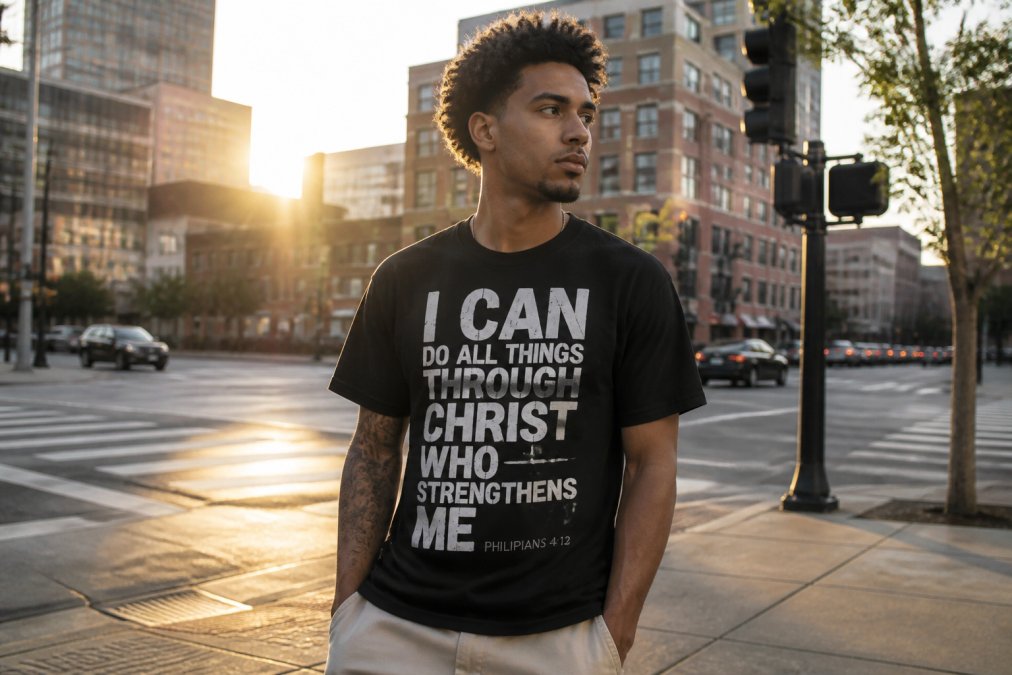
The fastest way to make faith visible in streetwear is typography that carries a verse at full volume. Bold type turns a shirt into a statement before anyone reads a word, which is exactly the point for unique christian streetwear design ideas that spark conversation.
At Saved, not finished, we offer designs where the message is legible. A verse set in heavy sans-serif across the chest can make a statement.

Three typography approaches that hold up well:
- Full-verse placement: Set the entire scripture in condensed type across the torso.
- Single-word emphasis: Isolate one word ("Grace," "Redeemed") in oversized letterforms.
- Stacked lines: Break a verse into three or four stacked lines for a poster-like effect.
2. Christian Streetwear Design Inspiration from Urban Culture
Urban culture supplies the visual vocabulary that makes faith-based apparel feel current rather than dated. Skate graphics, hip-hop album art, and graffiti lettering all offer frameworks you can adapt.
Study how streetwear brands handle negative space, then apply that restraint to scripture. The best Christian streetwear design inspiration comes from observing what already works on the street and asking how a verse would fit that format.
Look at:
- Skate deck graphics for bold, simple compositions
- Vintage concert tees for distressed, worn-in textures
- Transit posters for high-contrast type hierarchy
3. Minimalist Christian Apparel Designs: Subtle Faith Statements
Minimalist christian apparel designs serve the wearer who wants faith present but not loud. A small cross, a single reference like "John 3:16" in fine type, or a subtle symbol on the sleeve lets the message stay personal.
This approach works especially well for the introverted believer who wants a conversation starter without shouting. The design invites a question rather than demanding attention.
Common minimalist moves:
- A single-line verse reference on the chest
- A small embroidered symbol at the cuff
- Tone-on-tone printing that reveals the message in certain light
The trade-off is real: subtle designs may start fewer conversations. If your goal is visibility, pairing a minimalist piece with a bolder layer can be effective.
4. Symbolism and Religious Imagery in Modern Christian Streetwear
Religious symbolism gives a design depth that text alone can't reach. A dove, a fish, a crown of thorns, or a shepherd's staff communicates instantly to those who recognize it and intrigues those who don't.
Modern christian streetwear treats these symbols as graphic elements, not decoration. Scale them up, abstract them, or repeat them in a pattern.
| Symbol | Common Meaning | Design Approach |
|---|---|---|
| Dove | Holy Spirit, peace | Clean line art, single color |
| Fish | Early Christian identity | Minimal outline or filled |
| Crown of thorns | Sacrifice | Detailed illustration, muted palette |
| Cross | Faith, redemption | Bold, abstract, or repeated |
5. How to Start a Christian Clothing Brand: From Concept to Launch
Learning how to start a christian clothing brand comes down to five steps: define your message, design your first collection, source blanks, produce samples, and launch small.
Step 1: Define your message. Write one sentence describing what your brand stands for. Every design should serve that sentence.
Step 2: Design your first collection. Start with five to eight pieces. A focused drop beats a scattered catalog.
Step 3: Source apparel blanks. Choose a supplier whose fabric weight and fit match your vision.
Step 4: Produce samples. Wear each sample for a week before selling it. Wash it, sweat in it, and check how the print holds.
Step 5: Launch small. Release a limited run, gather feedback, and restock what sells.
U.S. Small Business Administration guide to starting a business
6. Color Palettes and Layering for Unique Christian Streetwear
Color and layering turn individual pieces into outfits. Earth tones, black, and off-white form a reliable base for faith-based apparel, while one accent color adds energy.
Layering techniques for streetwear follow a simple rule: build from a base tee, add a mid-layer, finish with an outer piece. A graphic tee under an open hoodie keeps the message visible while adding depth.
| Palette | Base Colors | Accent | Best For |
|---|---|---|---|
| Earth tone | Tan, olive, brown | Rust | Everyday wear |
| Monochrome | Black, grey, white | None | Minimalist designs |
| High contrast | Black, white | Red | Bold typography |
Saved, not finished offers tees and hoodies that can be worn alone or layered.
7. Legal and Ethical Considerations for Faith-Based Apparel
Copyright and trademark law apply to religious imagery just as they do to any other design. A verse from most modern Bible translations is protected by the publisher's copyright, so check the translation's usage terms before printing (copyright.gov).
The U.S. Copyright Office guidance on fair use explains when limited use may apply, but commercial apparel rarely qualifies.
On the ethical side, sourcing matters. Look for suppliers who publish labor and material standards, and be honest with customers about where your blanks come from. Faith-based brands carry an extra expectation of integrity, and buyers notice when that expectation isn't met.
Frequently Asked Questions
What are some creative ideas for Christian shirts?
Creative Christian shirts often use bold typography to display a verse, or incorporate subtle symbols like a cross or dove. You can also use minimalist designs with small text or icons. For streetwear, consider layering graphics with urban elements like graffiti or geometric shapes. Brands like Saved, not finished offer designs such as the Blessed Tee that blend faith and style.
How do you design streetwear that reflects faith?
Start by choosing a message or verse that resonates. Use design elements like typography, color, and imagery to convey it. For a streetwear aesthetic, mix bold fonts with modern graphics. Keep it authentic to your style. Consider how the design will spark conversation. Many brands use symbols like crosses or fish in creative ways. Always ensure the design aligns with your beliefs and appeals to your target audience.
What design elements define modern Christian streetwear?
Modern Christian streetwear often features bold typography, minimalist symbols, and urban-inspired graphics. Common elements include crosses, doves, and scripture references integrated into streetwear silhouettes like hoodies and tees. Color palettes range from neutral tones to vibrant hues. Layering and oversized fits are also popular. The key is balancing faith expression with contemporary fashion trends.
How can I start a Christian clothing brand?
To start a Christian clothing brand, first define your mission and target audience. Research competitors and identify a unique angle. Design your apparel using software like Adobe Illustrator or Canva. Source blanks from suppliers like Gildan or Bella+Canvas. Set up an online store using Shopify or similar platforms. Market through social media and faith communities. Ensure legal compliance for any copyrighted imagery.
Starting a faith-driven clothing line means getting the design, the message, and the ethics right at the same time. Saved, not finished exists to make that easier, with faith-inspired tees and hoodies built to start conversations and hold up wash after wash. Browse the collection and find a piece that lets you wear your faith with confidence.