
Table of Contents
- What Theological Symbolism Means in Modern Apparel
- The Cross and Crucifixion Imagery: Central to Faith Expression
- Biblical Motifs and Scriptural Typography in Design
- Sacred Geometry and the Ichthys: Ancient Truth in Contemporary Fashion
- Faith-Inspired Streetwear Trends Reshaping Youth Culture
- How to Style Religious Apparel for Everyday Wear
- The Meaning of Christian Symbols in Fashion and Cultural Identity
- Ethical Manufacturing and Theological Values in Apparel Production
- Frequently Asked Questions
Last Updated: September 29, 2026
What Theological Symbolism Means in Modern Apparel
Theological symbolism in apparel represents the intentional use of sacred imagery, biblical references, and faith-based design elements to communicate spiritual conviction through clothing. It's apparel that speaks, turning your outfit into a statement of belief rather than just a fashion choice.
Faith-inspired apparel has moved from church settings to mainstream culture. Young adults use clothing as a form of witness, a visible cross, scriptural phrase, or sacred geometry sparks conversations about their spiritual journey without words.
At Saved, not finished, we understand that apparel can be both aesthetically compelling and spiritually purposeful. Your clothing shouldn't require you to choose between looking sharp and living authentically. This guide breaks down the theological foundations, design trends, and practical styling approaches that make theological symbolism apparel a meaningful way to express your faith daily.
The Cross and Crucifixion Imagery: Central to Faith Expression
The cross remains the most recognizable symbol in Christian faith. It's not merely decorative, it represents the cornerstone of Christian theology: redemption through sacrifice. When the cross appears in contemporary apparel design, it carries the full weight of that theological narrative, condensed into a visual statement.
Crucifixion imagery depicts the actual scene or emphasizes Christ's suffering, challenging wearers and observers to confront sacrifice rather than its symbol. This discomfort makes it an effective conversation starter.
Modern designs range from understated chest placements to bold centerpieces using negative space and geometric abstraction. The theological claim remains constant; design execution determines whether it whispers or shouts.
When styling cross-centered pieces, let the design be the focus. Pair a bold cross graphic tee with neutral bottoms. Avoid competing visual elements that dilute the message. The power of the symbol depends on clarity.
Biblical Motifs and Scriptural Typography in Design
Scriptural typography, the artistic rendering of Bible verses directly onto apparel, creates a different kind of theological symbolism. Rather than relying on abstract symbols, these designs embed actual words of scripture into the fabric. A verse becomes wearable theology.
Strong scriptural typography uses negative space, careful fonts, and strategic placement to ensure the text reads as intentional art, inviting readers to engage with the full verse.
Biblical motifs include the dove (Holy Spirit), lamb (Christ), vine (spiritual connection), and nativity or resurrection scenes. These tap into centuries of iconographic tradition embedded in Western visual culture.
The theological value of scriptural typography lies in its specificity. You're not just saying "I'm Christian." You're saying "This particular passage matters to me." It invites deeper conversation and forces you to know your own faith well enough to wear it publicly.
Sacred Geometry and the Ichthys: Ancient Truth in Contemporary Fashion
Sacred geometry, the belief that proportions, shapes, and patterns carry spiritual significance, uses circles, triangles, and interlocking patterns to represent divine order, the Trinity, and spiritual wholeness in contemporary apparel.
The Ichthys (fish symbol) originated in early Christian communities as a covert identifier, the Greek word "ichthys" is an acronym for "Jesus Christ, God's Son, Savior." In modern apparel, it connects to that legacy of faithful witness, reframed for a context where wearing faith is countercultural rather than dangerous.
Sacred geometry operates on multiple levels: casual observers see an interesting pattern while those familiar with theological symbolism recognize deeper meaning, allowing wearers to express faith subtly or clearly depending on audience.
Modern streetwear brands increasingly incorporate these elements because they satisfy both aesthetic and spiritual hunger. A geometric pattern looks sharp. It also means something. That dual function is what separates theological symbolism in apparel from generic fashion.
Faith-Inspired Streetwear Trends Reshaping Youth Culture
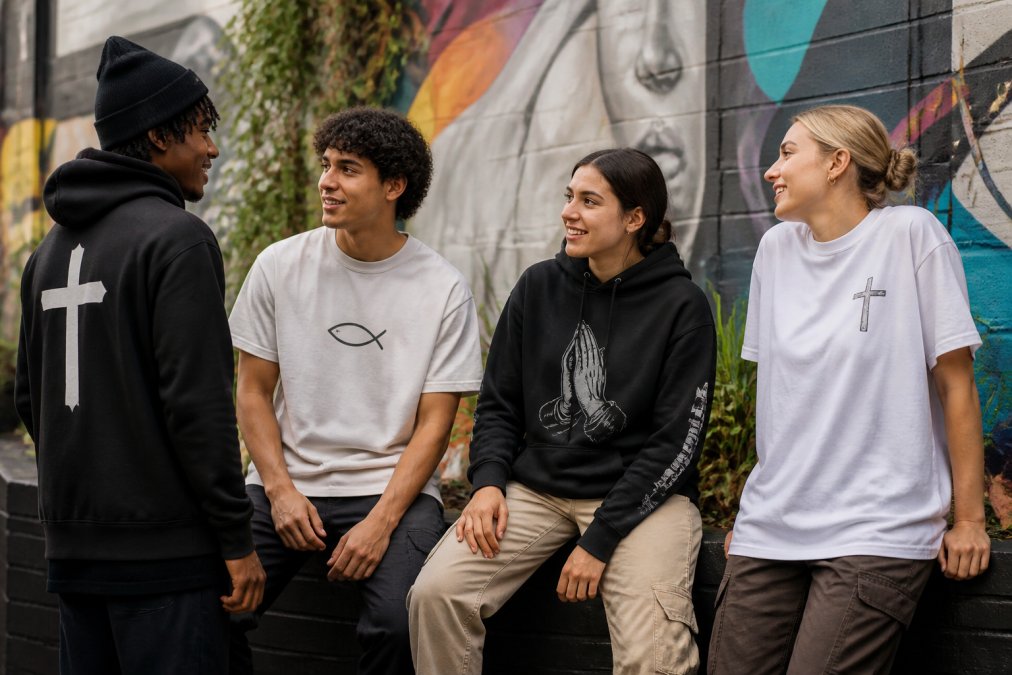
Faith-inspired streetwear has moved mainstream, raising a critical question: Can sacred symbols survive commodification? Young adults aged 18-35 treat apparel as a primary vehicle for identity expression, refusing to compartmentalize faith. But visibility comes with a cost.
The Commercialization Problem
Sacred symbols, the cross, Ichthys, scriptural text, carry centuries of theological weight representing sacrifice, redemption, witness, and conviction. When printed on mass-market apparel, they risk becoming hollow. A cross on a $15 tee made under questionable labor practices communicates differently than one worn as genuine faith expression.
There's a difference between incarnational theology and commodification. Incarnation means the sacred takes on material form with purpose and integrity; commodification strips meaning and sells for profit.
Young believers want public faith expression; brands want profit; consumers want affordable, stylish pieces. These desires create pressure to reduce complex theological symbols to marketable graphics, diminishing theological weight.
Authenticity as a Response
Current trends emphasize authenticity over perfection. Oversized silhouettes, intentional distressing, and bold placement signal "lived conviction" rather than corporate polish, making designs feel earned rather than manufactured.
Young consumers detect inauthenticity. If a brand claims theological values while exploiting workers, or features scriptural text while contradicting those scriptures, hypocrisy undermines the message. Authenticity means alignment between symbol and practice.
The Sustainability-Theology Connection
Sustainability and ethical production are extensions of theological symbolism, not separate from it. If a tee features a cross claiming Christian values, the conditions under which it was made become a theological statement. Fair wages and environmental stewardship express the same faith the apparel claims to represent.
Stewardship, the idea that humans are caretakers of creation, applies directly to apparel manufacturing. Brands using sustainable materials and paying fair wages practice theology through supply chain decisions. Those exploiting workers while selling religious apparel commit a form of blasphemy.
Young consumers recognize this connection. Faith-driven wearers ask hard questions about labor justice and environmental impact, wanting faith expressed consistently in design and production.
The Conversation-Starter Function
Young wearers want faith visible to discuss it. Apparel becomes the opening line, a bold cross or scriptural verse signals willingness to dialogue about faith.
This function depends on authentic engagement. If wearers can't articulate what the symbol means or why it matters, it becomes purely aesthetic. Effective faith-inspired streetwear requires wearers to understand symbols deeply enough to defend, explain, and live them consistently.
The Risk of Trend Fatigue
As faith-inspired streetwear becomes mainstream, symbols risk losing power through overuse. Brands must balance honoring traditional theology with contemporary design while resisting pressure to reduce sacred symbols to disposable fashion.
The strongest faith-inspired streetwear maintains theological integrity while remaining culturally relevant. This requires designers rooted in actual theology, transparency about production, and wearers who understand that wearing theological symbolism apparel is a claim about belief and how they're willing to live.
How to Style Religious Apparel for Everyday Wear
Styling theological symbolism in apparel requires intention. The goal is to let the design speak without overwhelming your overall aesthetic.
For graphic-heavy pieces, keep the rest of your outfit minimal. A statement tee pairs well with clean jeans, neutral sneakers, and minimal accessories, letting the apparel do the talking in casual settings.
For subtle pieces like small crosses or geometric patterns, layer under jackets or pair with patterned bottoms, allowing integration into existing style without wardrobe overhaul.
Consider your context. Bold statements signal confidence in casual settings; subtler designs work better in professional environments. The goal is expressing faith in ways that open dialogue.
Fit matters. A well-fitted tee with theological symbolism reads as deliberate. Quality construction and thoughtful design make pieces feel like statement pieces rather than generic apparel.
Build your collection gradually with one or two strong pieces anchoring your wardrobe, mixed with basics that don't compete for attention.
The Meaning of Christian Symbols in Fashion and Cultural Identity
Christian symbols function as cultural markers, but their theological meaning must be precise to avoid dilution. Designers and wearers should understand not just what symbols look like, but what they claim theologically.
The Cross and Its Variations
The Latin cross represents Christ's crucifixion and redemption; the Greek cross emphasizes divine order; the Celtic cross carries historical weight from Celtic Christianity. Specific forms matter, a Latin cross claims atonement theology; a Celtic cross signals cultural heritage. Conflating them flattens both meanings.
The Ichthys and Early Christian Witness
The Ichthys originated as a covert identifier in persecuted early Christian communities, embedding theological confession into a simple shape.
The Sacred Heart and Marian Symbolism
Doves, Lambs, and Scriptural Imagery
The Problem of Commercialized Symbols
Cultural Context and Symbol Meaning
Ethical Manufacturing and Theological Values in Apparel Production
Theological values should extend beyond design to production. How apparel is manufactured is itself a theological question: Are workers treated fairly? Is the environment respected? Does profit prioritize people or extraction?
Frequently Asked Questions
How is theological symbolism used in modern fashion?
Theological symbolism in modern apparel works as visual theology, translating spiritual principles into wearable design. The cross, biblical quotes, sacred geometry, and religious iconography appear on tees, hoodies, and sweaters to communicate faith directly and spark conversation. These symbols serve as modern witness, allowing wearers to express their spiritual conviction through everyday clothing. Many designs blend streetwear aesthetics with liturgical imagery, making faith expression feel contemporary rather than traditional. This approach transforms apparel into a medium for theological narrative, helping individuals live out their beliefs visibly.
What are common religious symbols used in streetwear?
Common religious symbols in streetwear include the cross (representing crucifixion and redemption), the Ichthys or fish symbol (ancient Christian marker), sacred hearts (devotional imagery), scriptural typography (Bible verses as design elements), and saintly iconography. Many contemporary designs also incorporate geometric sacred geometry patterns and incarnational theology visuals. These symbols appear on tees like the blessed Tee and hoodies, designed to invoke curiosity and spark meaningful conversations. The key is that these aren't decorative, each symbol carries theological weight and communicates a specific aspect of Christian faith through visual semiotics.
Why should I spend more on faith-inspired apparel when regular streetwear is cheaper?
Faith-inspired apparel carries value beyond fabric and stitching. Products like the blessed Sweater ($28.75) and blessed Hoodie ($26.45) are made with 50/50 fleece blends designed for durability. More importantly, faith-inspired apparel serves a theological purpose, it's engineered to communicate your spiritual conviction and ignite community conversations. The design intentionality, quality construction, and the role these garments play in your daily faith expression justify the investment. You're not paying for a logo; you're investing in apparel that empowers you to live out loud and connect with others who share your journey.
How do I know if religious apparel will actually start conversations or feel too preachy?
The key is choosing designs that align with your personal style and comfort level. Faith-inspired streetwear spans a spectrum, from bold, statement-making pieces to subtle designs that invite curiosity without feeling aggressive. Look for apparel that reflects your aesthetic while incorporating theological symbolism naturally. Quality pieces like the blessed Tee and Grace Tee are designed to feel like authentic streetwear, not costume or sermon. The symbolism works because it's intentional and embedded in the design rather than forced. Start with pieces that feel authentic to you, and you'll find they naturally spark conversations with people who recognize the symbols and share your values.