
Table of Contents
- What Makes Christian Apparel Quality Worth Evaluating
- Christian Apparel Fabric Guide: Cotton, Blends, and Durability
- Print Durability and Design Longevity in Faith-Based Tees
- How to Wash Graphic Tees to Prevent Fading
- Best Christian Streetwear Brands: What Sets Quality Apart
- Price vs. Value: Does Premium Christian Apparel Deliver
- Ethical Manufacturing and Supply Chain Transparency
- Conclusion
Last Updated: August 26, 2026
What Makes Christian Apparel Quality Worth Evaluating
When you're shopping for faith-inspired clothing, the question isn't just whether to buy, it's whether the quality justifies the investment. Christian apparel quality matters because you're wearing something that represents your identity and beliefs every single day. Unlike a regular t-shirt you'll toss in a drawer, faith-based apparel is meant to spark conversations, express conviction, and hold up through repeated wear and washing.
The difference between high-quality and low-quality Christian apparel comes down to three core factors: fabric composition, construction durability, and print longevity. A cheaply made graphic tee might fade after five washes. A well-constructed piece with proper fabric weight and printing technique can last for years. For brands like Saved, not finished, the commitment goes beyond materials, it's about creating apparel that helps you to express your faith boldly while standing up to real-world wear.
Here's what separates apparel worth buying from pieces you'll regret: genuine fabric durability, ethical manufacturing practices, and designs that actually communicate your message without falling apart. Below, we'll break down exactly how to evaluate Christian apparel quality so you can make informed decisions about where to spend your money.
Christian Apparel Fabric Guide: Cotton, Blends, and Durability
The foundation of any quality Christian apparel piece is the fabric itself. Most faith-based streetwear uses one of three fabric types, each with distinct advantages and trade-offs for comfort, durability, and longevity.
100% USA-grown cotton is the gold standard for Christian apparel quality. Cotton breathes naturally, feels soft against skin, and improves with age, it doesn't pill or degrade the way some synthetics do. The Still Fighting Tee from Saved, not finished uses 100% USA cotton in a heavyweight 7.5-ounce construction, which means it resists shrinkage and maintains its shape through dozens of washes. Heavier cotton (measured in ounces per square yard) signals better durability. Anything under 5 ounces feels thin and flimsy; 6-8 ounces is the sweet spot for t-shirts; 8+ ounces is ideal for hoodies and sweatshirts (astm.org).

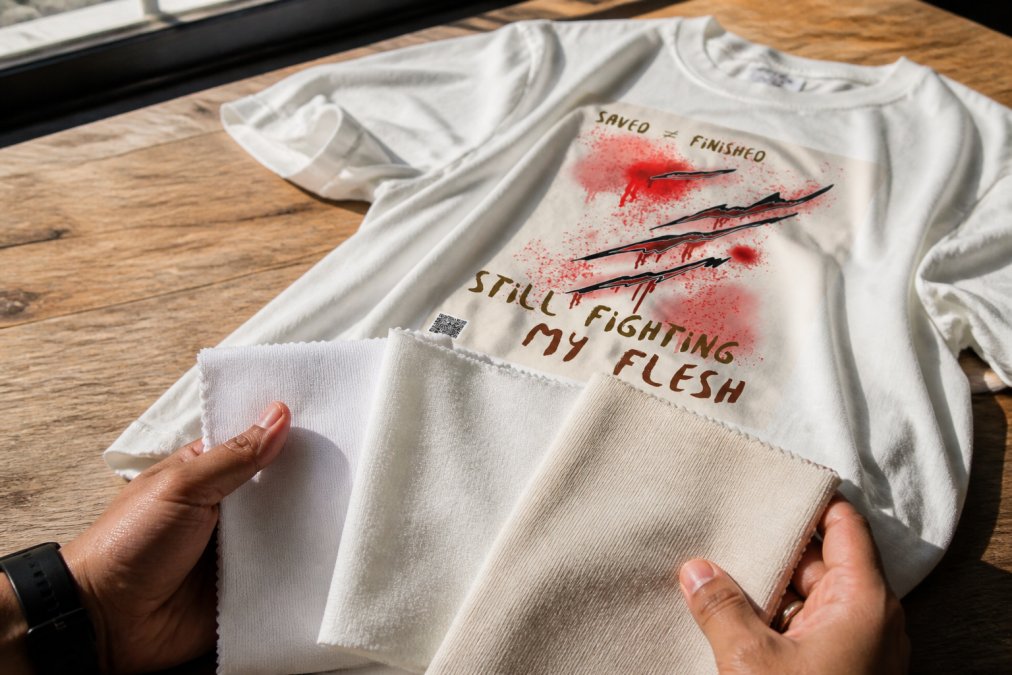
USA-Grown Cotton vs. Imported Alternatives
USA-grown cotton carries two advantages: traceability and ethical sourcing. When apparel brands source cotton from domestic suppliers, they can verify labor practices and environmental standards more easily. The Working on the rest des from Saved, not finished uses sustainably and fairly grown USA cotton in a 6-ounce weight, lighter than the Still Fighting Tee but still substantial enough for daily wear.
Imported cotton isn't inherently lower quality, but it's harder to verify the supply chain. Some imported fabrics are excellent; others cut corners on both material and labor practices. If ethical sourcing matters to you, and for many faith-driven consumers it does, USA-grown cotton provides transparency that imported alternatives often can't match.
50/50 Blends: Comfort and Longevity Trade-offs
Cotton-polyester blends (typically 50/50) offer a practical middle ground. Polyester adds stretch, reduces shrinkage, and makes the fabric more wrinkle-resistant. The Still working on it sweat and Working on the rest hood from Saved, not finished both use 50/50 blends in their fleece construction. This ratio works well for hoodies and sweatshirts because the polyester prevents excessive shrinkage while cotton maintains breathability.
The trade-off: pure cotton feels more natural and ages better, while blends are more forgiving in the wash and hold their shape more predictably. For graphic tees meant to last years, 100% cotton is preferable. For sweatshirts and hoodies you'll wear frequently, 50/50 blends perform better.
Print Durability and Design Longevity in Faith-Based Tees
The graphic or text on your Christian apparel is what communicates your message. If the design fades, cracks, or peels after a few months, the entire piece loses its purpose. Print durability depends on the printing technique used.

Screen printing is the most common method for faith-based apparel. It applies ink directly to fabric through a mesh screen, creating a durable finish that can withstand dozens of washes. High-quality screen printing uses thicker ink layers and proper curing (heat-setting) to lock the design in place. The Saved, not finished collection uses professional-grade screen printing that's designed to resist fading through repeated washing.
Direct-to-garment (DTG) printing sprays ink directly onto the fabric like an inkjet printer. It produces vibrant, detailed designs but is less durable than screen printing for heavy graphic coverage. DTG works better for smaller designs or intricate artwork; screen printing wins for bold, statement-making graphics.
The difference in print longevity is measurable: a well-executed screen print can survive 50+ washes without significant fading, while lower-quality DTG or poorly cured screen prints may show visible wear after 10-15 washes (peer-reviewed research). For apparel meant to spark conversations about your faith, durability is non-negotiable.
How to Wash Graphic Tees to Prevent Fading
Even the highest-quality Christian apparel will fade if you wash it incorrectly. The print and fabric both degrade faster with heat, agitation, and harsh chemicals.
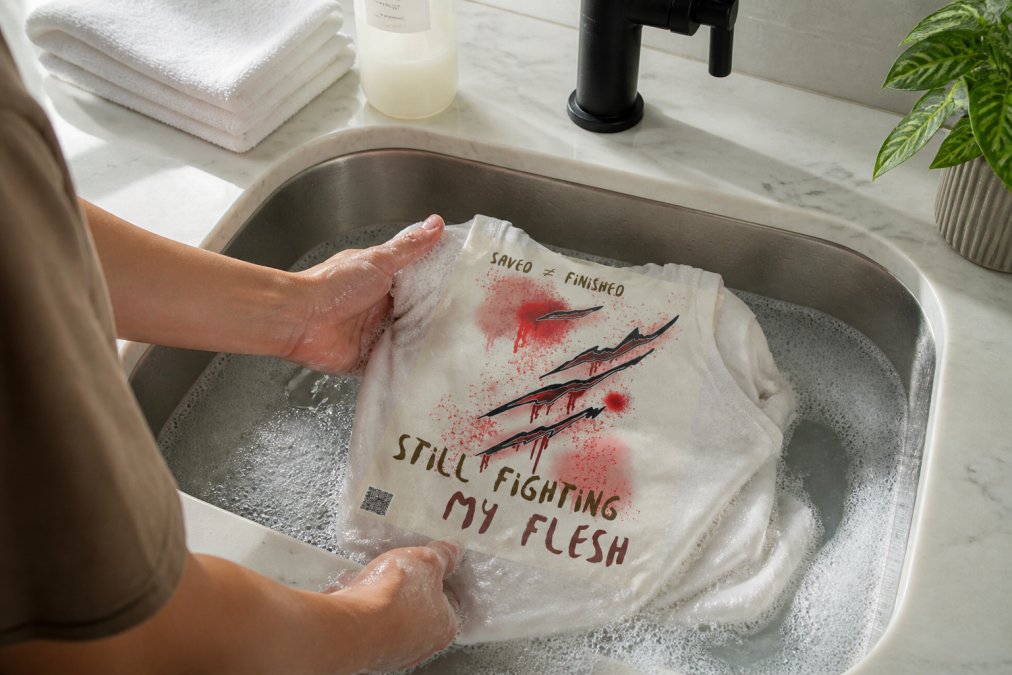
Turn graphic tees inside out before washing. This protects the printed design from direct friction and reduces exposure to detergent. It's a simple step that extends print life significantly.
Use cold water, not hot. Heat accelerates fading and can cause shrinkage, especially in cotton. Cold water preserves both fabric color and print vibrancy.
Wash in delicate or gentle cycles. Machine agitation damages prints and weakens fabric fibers over time. Hand-washing is ideal for pieces you want to keep long-term, but gentle machine cycles are acceptable for everyday wear.
Skip the dryer for graphic tees. High heat is the fastest way to fade prints and shrink fabric. Air-dry flat or hang-dry instead. It takes longer but adds years to the life of your apparel.
Use mild detergent. Heavy-duty or bleach-containing detergents break down both fabric and ink. Look for gentle, color-safe formulas.
These practices aren't optional if you want your Christian apparel to maintain its appearance and message over time. A $25 tee that fades in three months is a poor investment; the same tee cared for properly can last 2-3 years or longer.
Best Christian Streetwear Brands: What Sets Quality Apart
Not all Christian apparel is created equal. The brands that stand out prioritize fabric quality, print durability, and ethical manufacturing, and they're transparent about it.
Saved, not finished leads the market by combining heavyweight fabrics with professional-grade construction. Their Still Fighting Tee ($24.63) uses 100% USA cotton in a 7.5-ounce weight with double-needle stitching on the neck, sleeves, and hem. This construction detail matters: double-needle stitching prevents seams from splitting and adds years of durability. The tee also features a quarter-turned body (stitched at a slight angle) to eliminate center creases, which is a detail most budget brands skip.
The brand's Working on the rest des ($14.83) offers value without sacrificing quality. It's a lighter 6-ounce tee, but still uses 100% USA cotton and includes double-needle construction. For students or budget-conscious buyers, this is the entry point that doesn't compromise on durability.
For hoodies and sweatshirts, Saved, not finished offers two options. The Still working on it sweat ($28.75) uses a 50/50 blend in 8-ounce fleece, ideal for layering and frequent wear. The Working on the rest hood ($34.37) steps up to a pullover hoodie with anti-pill fabric and seamless body construction, which means fewer seams to fail and a cleaner aesthetic.

What separates these pieces from lower-quality alternatives is visible in the construction details: reinforced neck tape, double-needle stitching, proper fabric weight, and professional screen printing. These aren't luxury touches, they're the baseline for apparel that actually lasts.
Price vs. Value: Does Premium Christian Apparel Deliver
This is the question that stops many buyers: why pay $25-35 for Christian apparel when you can find generic t-shirts for $10-15?
The answer lies in what you're actually getting. A $10 t-shirt typically uses thin fabric (4-5 ounces), single-needle stitching, and lower-quality printing. It will fade noticeably after 5-10 washes and may develop holes or thin spots within a year. A $25 Christian apparel piece from Saved, not finished uses 6-8 ounce fabric, double-needle construction, and professional screen printing. It maintains its appearance and structural integrity for 2-3 years of regular wear.
The math is straightforward: if you wear a t-shirt 100 times before it becomes unwearable, a $10 shirt costs $0.10 per wear. A $25 shirt worn 300+ times costs $0.08 per wear. But the real value isn't in the per-wear calculation, it's in having apparel that reliably represents your faith without falling apart.
For Christian apparel specifically, there's an additional value component: the design is meant to spark conversations and express conviction. A faded, deteriorating tee undermines that message. A well-maintained piece with durable printing communicates intentionality and authenticity.
Premium brands also invest in ethical manufacturing and transparent supply chains. You're not just paying for better fabric, you're paying for assurance that the apparel was made responsibly. For faith-driven consumers who value integrity, that's worth the premium.
| Apparel Type | Saved, not finished | Budget Alternative | Durability Difference |
|---|---|---|---|
| Basic Tee | Still Fighting ($24.63), 7.5 oz 100% cotton | Generic tee ($10-12), 4-5 oz blend | 2-3x longer lifespan, better print retention |
| Value Tee | Working on the rest des ($14.83), 6 oz USA cotton | Budget streetwear ($8-10), thin fabric | Maintains shape and color significantly longer |
| Sweatshirt | Still working on it sweat ($28.75), 8 oz 50/50 blend | Basic hoodie ($15-18), thin fleece | Anti-pill, reinforced seams, holds color |
| Premium Hoodie | Working on the rest hood ($34.37), anti-pill, seamless | Fast-fashion hoodie ($20-25) | Seamless construction eliminates seam failure risk |
Ethical Manufacturing and Supply Chain Transparency
For many people who wear Christian apparel, the values embedded in the product matter as much as the product itself. Ethical manufacturing isn't a marketing buzzword, it's a reflection of whether your clothing aligns with your beliefs.
Saved, not finished sources USA-grown cotton through suppliers that practice fair labor and sustainable farming. The brand's commitment to transparency means you can trace where your apparel comes from and how it's made. This isn't common in the Christian apparel space, where many brands use opaque supply chains or rely on overseas manufacturing without accountability.
The environmental impact also matters. USA-grown cotton requires less transportation, reducing carbon footprint. Gildan's manufacturing process (used for several Saved, not finished pieces) utilizes 45% renewable energy, which is a measurable commitment to reducing environmental impact.
When you buy from brands that prioritize ethical sourcing and sustainable manufacturing, you're not just getting better-quality apparel, you're aligning your purchasing decisions with your values. For faith-driven consumers, that alignment is meaningful.
ANSI/ISEA 107 high-visibility standards for apparel safety
Conclusion
Is Christian apparel quality worth it? The answer depends on what you value. If you're looking for a cheap graphic tee to wear occasionally, budget alternatives exist. But if you want apparel that actually represents your faith, holds up through regular wear and washing, and reflects your commitment to quality and ethics, premium Christian apparel delivers real value.
Saved, not finished stands out because it combines all three elements: durable fabrics (100% USA cotton and quality blends), professional construction (double-needle stitching, reinforced seams, proper fabric weight), and transparent, ethical manufacturing. The Still Fighting Tee and Working on the rest des offer different price points without compromising on the fundamentals. The hoodies and sweatshirts extend that quality to layering pieces you'll wear year-round.
Start with the Still Fighting Tee or Working on the rest des to experience the difference quality construction makes. You'll notice the fabric weight, the durability of the print, and the way the piece holds its shape through dozens of washes. Once you've experienced that, you'll understand why Christian apparel quality is worth the investment, because your faith deserves apparel that lasts as long as your commitment does. Shop now and discover apparel built to help your daily expression of belief.
Frequently Asked Questions
What should I look for when buying Christian apparel online?
Check the fabric composition first, 100% USA cotton or quality cotton-blend garments hold up better than cheap synthetics. Look for specific construction details: double-needle stitching, reinforced neck tape, and anti-pill fabric indicate durability. Review the print technique; screen printing and direct-to-garment methods resist fading longer than basic transfers. Read customer reviews mentioning wash durability and fit consistency. Verify the brand's supply chain transparency and whether they source ethically grown cotton. The Still Fighting Tee uses 7.5 oz. heavyweight USA cotton with double-needle stitching, these details matter for longevity.
How does Christian apparel fabric guide your purchasing decision?
Fabric weight, fiber content, and blend ratios directly affect how long your apparel lasts. Heavier fabrics (7-8 oz.) resist shrinkage and wear better than lightweight 6 oz. options. 100% cotton offers breathability but can shrink; 50/50 cotton-polyester blends reduce shrinkage and add stretch recovery. USA-grown cotton sourced sustainably often indicates better quality control. Understanding these differences prevents buying cheap apparel that fades, pills, or distorts after a few washes. Quality Christian streetwear brands prioritize these specifications because faith-inspired designs deserve garments that hold up to regular wear and washing.
Is it worth paying more for faith-based streetwear?
Yes, when quality justifies the premium. Entry-level Christian apparel at $14.83-$24.63 uses solid construction (like the Working on the rest des with 100% USA cotton) and meaningful designs. Mid-range options at $26.45-$34.37 add features like anti-pill fabric, reinforced hoods, and heavier fleece blends that extend garment life significantly. Cheap alternatives from dropshippers often use thin fabric, poor stitching, and fading prints that disappoint within weeks. Premium Christian apparel also reflects ethical manufacturing and community mission, you're investing in values alignment, not just fabric. The conversation-starting power of quality faith-inspired designs also adds value beyond the garment itself.
How can you tell if a Christian clothing brand uses high-quality fabrics?
Look for transparent fabric specifications: ounce weight, fiber percentage, and construction details. Brands listing 7-8 oz. fabric, USA-grown cotton, and double-needle stitching are signaling quality. Check for anti-pill technology, spandex in ribbing for stretch recovery, and taped seams. Verify manufacturing claims, sustainably sourced cotton and fair labor practices indicate investment in quality standards. Read reviews mentioning shrinkage, print longevity, and fit accuracy across multiple wears and washes. Best Christian streetwear brands publish these details upfront; if a brand hides specifications or uses vague language, quality is likely compromised. Saved, not finished products clearly specify fabric composition and construction, this transparency reflects confidence in durability.
What's the difference between screen printing and direct-to-garment printing for faith designs?
Screen printing applies ink through mesh screens, creating durable, vibrant designs that resist fading through many wash cycles. It works best on solid colors and is ideal for bold faith-inspired graphics. Direct-to-garment (DTG) printing injects ink directly into fabric, allowing photo-quality detail and color gradients, but can fade faster with repeated washing and bleach exposure. Screen printing typically outlasts DTG on everyday apparel, making it the better choice for Christian streetwear you'll wear frequently. Both methods preserve design longevity when applied to quality fabric and washed properly. Ask brands which technique they use; screen printing on heavyweight cotton signals investment in print durability.
This article was written using GrandRanker