
Table of Contents
- Why Incorporating Scripture Into Streetwear Matters
- Choosing the Right Bible Verse for Your Design
- Bible Verse T-Shirt Design Ideas That Connect
- Christian Clothing Typography That Commands Attention
- Bible Verse Placement on Clothing for Maximum Impact
- Can I Sell T-Shirts With Bible Verses? Legal and Licensing Considerations
- Blending Urban Aesthetics With Spiritual Expression
- Frequently Asked Questions
Last Updated: October 10, 2026
Why Incorporating Scripture Into Streetwear Matters
Faith-based apparel is a statement. At Saved, not finished, we believe that incorporating scripture into streetwear design trends allows people to wear their convictions daily, turning everyday outfits into conversations about what matters most.
Incorporating scripture streetwear reaches people in coffee shops, offices, gyms, and streets, opening doors that might otherwise stay closed. For young adults aged 18-35 who value street culture, faith-based apparel offers a way to live authentically without compromise.
Streetwear carries cultural weight, speaking the language of urban fashion and hip-hop aesthetics. When you blend biblical themes with modern design, you're participating in culture while staying grounded in your beliefs.
Choosing the Right Bible Verse for Your Design
Not every Bible verse works for streetwear. The right scripture for your design needs to be bold, concise, and meaningful enough to stand alone visually.
Start by asking: What message do I want to communicate? Choose verses about endurance for strength, or passages about rest for peace. The best Christian clothing typography begins with a verse that resonates personally, if the words don't move you, they won't move anyone wearing them.
Strong verses for streetwear designs include:
- Short passages (under 15 words) that fit naturally on apparel
- Verses with universal themes that transcend specific denominations
- Scripture with active language (verbs like "stand," "rise," "run," "hold")
- Passages that challenge or inspire rather than condemn
- Bible verses that work as standalone statements without explanation
Length matters tremendously. A 40-word verse becomes unreadable on a t-shirt. Shorter verses with poetic rhythm become memorable, like Philippians 4:13 ("I can do all things through Christ who strengthens me"), inviting contemplation and repetition.
For streetwear, verses that feel helping and inclusive resonate more broadly than those that feel restrictive or judgmental. Choose verses that inspire rather than condemn.
Bible Verse T-Shirt Design Ideas That Connect
The best Bible verse T-shirt design ideas balance bold typography with breathing room. Your eye should land immediately on the message, not get lost in visual noise.
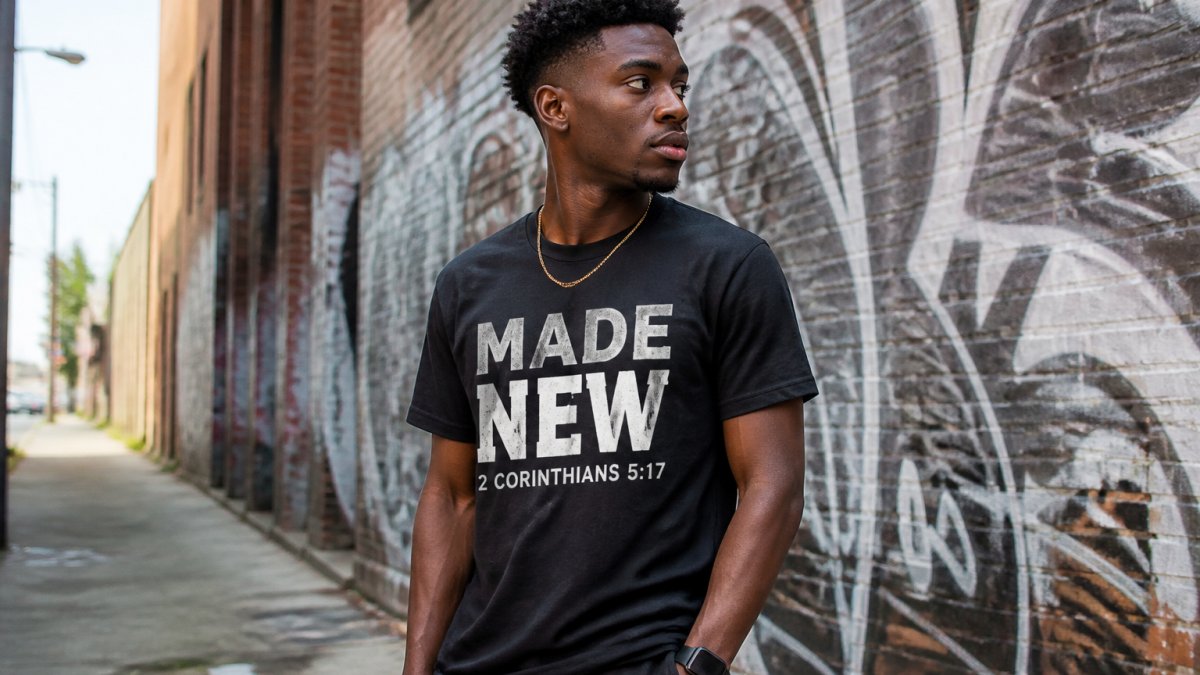
Consider these proven approaches:
Minimalist text-only designs place scripture in a single, striking typeface centered on the chest. This approach works well for those who need a conversation starter without feeling like they're shouting.
Mixed typography uses multiple font weights to emphasize key words. Imagine "I can do" in light lettering, "ALL THINGS" in bold, then "through Christ" in regular weight. This creates visual hierarchy and draws attention to the most powerful words.
Verse with symbolic imagery incorporates minimal religious symbols (crown, cross, flame) alongside scripture. Designs pairing verses with subtle urban elements (geometric shapes or street-inspired graphics) resonate with younger audiences who appreciate both faith and contemporary aesthetics.
Placement-based designs run scripture along the sleeve, down the back, or vertically along the side. This unconventional placement makes the design feel fresh and encourages people to look more carefully to read it.
Color contrast strategies use unexpected combinations to make designs stand out. Neon scripture on dark backgrounds, metallic ink, or reverse-color designs command attention without elaborate imagery.
The goal is clarity with personality. Your Bible verse apparel should communicate instantly but leave room for deeper reflection once someone takes time to really look.
Christian Clothing Typography That Commands Attention
Typography is where incorporating scripture streetwear becomes an art form. Your font choice shapes how people interpret your message before reading the words.
Serif fonts feel classic and authoritative for verses about foundation or truth. Pair them with modern layout or unexpected placement to avoid feeling traditional in streetwear.
Sans-serif fonts feel contemporary and direct, dominating modern streetwear. They're legible from distance, which matters when someone's reading your shirt across a room.
Hand-drawn or script fonts add personality and feel intimate. Use restraint, script works best for shorter verses or secondary text, not main messages where legibility suffers.
All-caps versus mixed case changes emotional tone. All caps feels bold and commanding; mixed case feels conversational. Streetwear skews toward mixed case and lowercase for approachability.
Typography size matters equally. Contrast in scale creates visual interest and guides the reader's eye. Imagine "FAITH" in 4-inch letters with "over" in tiny text, then "FEAR" in 3-inch letters. The contrast makes the design memorable.
Spacing is underrated. Generous spacing between words and lines feels confident and intentional. When incorporating scripture into streetwear design, white space is your friend.
Bible Verse Placement on Clothing for Maximum Impact
Where you position your scripture on a garment fundamentally changes how it functions and how people engage with it.
Chest placement is the classic approach, visible, readable from arm's length, and a natural conversation starter. For balanced faith visibility, this is where most faith-inspired apparel lives.
Back placement creates mystery and works powerfully for verses about standing firm or moving forward. It also accommodates longer scripture passages.
Sleeve placement feels modern and unexpected, visible in certain contexts but not always. It appeals to people wanting flexibility in faith visibility.
Vertical spine placement (running down the center back or front) creates an elegant, almost architectural feel. It's distinctive and harder to replicate, which helps your design stand out in a sea of standard chest graphics.
Small placement (pocket area, collar back, inside label) serves different purposes. These subtle positions work for people who want their faith present without making it the dominant visual. It's a nod to your beliefs rather than a proclamation.
Wraparound designs (continuing from front to back or side to side) create continuity and feel premium. They're more expensive to produce but create a cohesive visual experience.
Bible verse placement on clothing for maximum impact depends on your intended wearer's comfort level. Someone bold and extroverted might want front-and-center chest placement. Someone more reserved might prefer back placement or a subtle sleeve detail. The best designs account for this psychology.
| Placement | Visibility | Best For | Conversation Level |
|---|---|---|---|
| Chest | Always visible | Direct faith expression | High |
| Back | Visible from behind | Strength and standing firm | Medium-High |
| Sleeve | Situational | Modern, flexible expression | Medium |
| Spine | Formal, elegant | Sophisticated believers | Medium |
| Small/Subtle | Minimal | Introverts, professional settings | Low |
Can I Sell T-Shirts With Bible Verses? Legal and Licensing Considerations
This is the question that stops many people from launching faith-based apparel: Can I legally sell T-shirts with Bible verses?
The short answer: Yes, with important caveats.
Scripture text itself is generally not copyrighted. The Bible's content is in the public domain in the United States. You can print most Bible verses on apparel without needing permission from publishers. However, and this is critical, specific Bible translations sometimes are copyrighted.
The King James Version (KJV) is public domain. Most modern translations like the New International Version (NIV), English Standard Version (ESV), and The Message have copyright protection.
Here's the practical approach:
- Use public domain versions (KJV, World English Bible) freely
- For modern translations, contact the publisher directly
- Many publishers grant permission for small-scale apparel use without fees
- Always credit the translation on your label or tag
- Keep documentation of your permissions
Religious symbols and imagery have fewer restrictions than you might think. A cross, a crown of thorns, or a flame are not trademarked by any religious organization. You can incorporate them freely. However, specific branded religious logos or trademarked imagery (like official denominational symbols) require permission.
Your original design work is protected. Once you create a unique graphic incorporating scripture, that design is yours. You own the visual expression even if the scripture text itself is public domain. This means others can't copy your specific layout, typography choices, or artistic interpretation.
Trademark considerations matter if you're building a brand. If you're launching apparel under a business name, register that name as a trademark to protect your brand identity (Trademark process). This prevents others from selling similar products under your brand name.
At Saved, not finished, we approach this by using public domain scripture and crediting translations on every garment. We also ensure our design work is distinctly ours, the visual expression of faith through our brand voice.
Blending Urban Aesthetics With Spiritual Expression
Here's where incorporating scripture into streetwear design trends becomes genuinely innovative: merging street culture with faith expression without either one overwhelming the other.
Urban aesthetics include bold colors, geometric shapes, oversized typography, and cultural references rooted in hip-hop, graffiti art, and contemporary fashion. Spiritual expression traditionally emphasizes reverence, contemplation, and sacred imagery.
The fusion works when you treat scripture as a design element equal to urban style, not subordinate to it. This means your verse isn't apologizing for being on a streetwear shirt. It's confident. It belongs there.
Consider how contemporary fashion trends influence Christian clothing typography. Current streetwear emphasizes authenticity, personal narrative, and cultural commentary. Faith-based apparel that taps into these trends feels relevant rather than dated.
Practical blending strategies:
Use color psychology strategically. Neon and metallic inks feel modern and energetic. Earth tones feel grounded and authentic. Unexpected color combinations (like gold scripture on deep purple) feel premium and intentional.
Incorporate negative space creatively. Let the garment color become part of your design. This approach feels contemporary and works especially well for hoodie design and oversized fits popular in current streetwear.
Reference urban art movements respectfully. Graffiti-inspired lettering, stencil effects, or spray-paint aesthetics can frame scripture beautifully, but ensure the execution feels authentic, not appropriative.
Balance text with breathing room. Overcrowded designs feel cluttered. Strategic white space (or garment color) makes your message land harder.
The most successful designs feel like they belong to street culture while maintaining spiritual authenticity. They don't feel like compromise or dilution. They feel like evolution, faith expressed through the cultural language of the wearer's generation.
Expressing your faith through fashion isn't just about wearing a message, it's about claiming your identity and inviting connection. From our Faith Must Mature Tee to our Grace Guides Tee, each piece is crafted to spark conversations and connect you with others on the same spiritual journey.


Frequently Asked Questions
Can I sell T-shirts with Bible verses?
Yes, you can sell T-shirts with Bible verses, but you need to understand copyright and licensing. Bible text itself is in the public domain, but specific Bible translations (like the NIV or ESV) are copyrighted. Always verify your translation's licensing terms before commercial use. Consider reaching out to publishers for permission or use public-domain versions like the King James Version. Additionally, ensure any original artwork or designs accompanying the scripture are your own work or properly licensed.
What are the best Bible verses for streetwear design?
Choose verses that resonate with your audience and work visually as short text. Shorter verses like Philippians 4:13 ('I can do all things through Christ'), Proverbs 22:6, or John 3:16 translate well to apparel. Verses addressing strength, faith, purpose, and resilience connect with streetwear culture. Test different translations and lengths to see what feels authentic to your brand. Verses that inspire action or reflection tend to spark more conversations than purely decorative scripture.
How do I choose the right typography for Christian clothing?
Typography should balance readability with visual impact. Bold, modern sans-serif fonts work well for streetwear and feel contemporary rather than overly religious. Consider mixing font weights, a heavy weight for the main verse and lighter text for context or author attribution. Avoid overly ornate or script fonts that reduce legibility on apparel. Test your typography at actual print size; what looks good on screen may be unreadable on a shirt. Ensure contrast between text and garment color so the message is immediately visible.
Where should I place Bible verses on a T-shirt or hoodie?
Chest placement is most visible and creates immediate impact, working well for bold, shorter verses. Back placement allows for longer scripture passages and feels less confrontational while still making a statement. Sleeve text works for shorter phrases or single words. Consider your audience: chest placement is bold and conversation-starting; back placement is still expressive but slightly more subtle. Avoid placement that distorts or wraps awkwardly around seams. Test placement mockups before finalizing production to ensure the design sits naturally on the garment.