
Table of Contents
- Start With Your Personal Conviction, Not a Trend
- Choose Graphic Apparel That Sparks Real Conversation
- Faith-Based Streetwear Trends Worth Wearing in 2026
- How to Style Christian Apparel for Work, Church, and Everyday
- Build a Capsule Wardrobe That Reflects Your Values
- Balance Boldness With Humility So You Never Come Off Preachy
- Shop Ethically: Where Faith and Sustainable Fashion Meet
- Frequently Asked Questions
Last Updated: September 12, 2026
Start With Your Personal Conviction, Not a Trend
Learning how to make faith a statement with clothes starts with one decision: what you actually believe, not what's selling this season. Personal conviction is the foundation of faith-based fashion, and it's what separates a wardrobe that means something from one that just looks the part. At Saved, not finished, we empower individuals to express their faith through contemporary fashion.
Scripture speaks directly to this. Passages on modesty, humility, and inner beauty make it clear that outward appearance is meant to reflect something deeper, not replace it. That's the tension every believer navigates when they get dressed.
A common mistake is buying the loudest design first and figuring out the message later. In practice, that leads to a drawer full of shirts you never wear because they don't match who you're becoming.
Choose Graphic Apparel That Sparks Real Conversation
Graphic apparel is the fastest route from personal conviction to public conversation. A well-chosen tee does the introducing so you don't have to force it.
Here's what separates the shirts people ask about from the ones that get ignored:
- Clarity beats cleverness. If a stranger can't tell what your shirt means in three seconds, they won't ask.
- Specificity beats slogans. A single phrase tied to a real belief invites a question; a vague vibe doesn't.
- Placement matters. Chest and center-back prints get read. Small hem prints get missed.
Why Some Faith Shirts Get Ignored and Others Start Talks
Most faith shirts fail because they're either too abstract or too aggressive. The ones that work land somewhere in between: bold enough to be noticed, clear enough to be understood, and warm enough that someone feels comfortable asking about it. That's the difference between a shirt that preaches at people and one that opens a door.
Faith-Based Streetwear Trends Worth Wearing in 2026
Faith-based streetwear in 2026 is settling into restraint with intent: cleaner typography, muted earth tones, and oversized silhouettes that read as fashion first and message second. The shift matters because it widens where you can wear your faith without it feeling like a costume, and because it finally lets the ethics behind the garment carry as much weight as the words on it.
What's actually working now, and why:
- Minimalist type on heavyweight cotton. Fewer words, bigger impact. Heavyweight cotton holds a print crisp through repeated washing, so the message stays legible instead of cracking into an abstract smudge after a month.
- Layering pieces. Hoodies and sweaters under open jackets let the message appear and disappear naturally. This is the single most useful trend for anyone who moves between a casual office and a weekend gathering in the same day.
- Neutral palettes with one bold accent. Easy to coordinate, easy to repeat. A capsule built on charcoal, bone, and olive needs only one saturated piece to feel intentional.
- Tonal and embroidered marks over loud screen prints. A tone-on-tone chest hit or a small embroidered word reads as premium and survives more wash cycles than a large plastisol print.
The Trade-Off Nobody Mentions
Restraint cuts both ways. A muted, minimalist faith piece is easier to wear everywhere, but it's also easier for a stranger to miss entirely. If your goal is conversation, you're trading visibility for versatility. The practical fix is to keep one high-legibility piece in rotation, a clear phrase, a readable font size, chest or center-back placement, and let the rest of the wardrobe stay quiet.
Where Faith-Based Streetwear Is Heading Next
The category is moving toward values-based fashion, where the ethics behind the garment matter as much as the words on it. That's a healthy correction, and it's showing up in concrete ways: brands publishing fabric weights and country of origin, moving to tear-away labels so tags don't scratch, and standardizing on preshrunk cotton so a size medium stays a size medium after the first wash. A shirt that says something meaningful shouldn't come from a supply chain that contradicts it.
How to Style Christian Apparel for Work, Church, and Everyday
Styling Christian apparel across settings comes down to one rule: match the volume of the message to the volume of the room. A statement tee under a blazer reads differently than the same tee at a coffee shop, and that flexibility is the whole point. But most guides stop at the t-shirt, which leaves faith-based professionals with nothing to wear Monday through Friday. Here's how to cover all three rooms without buying three separate wardrobes.
A simple outfit coordination framework:

- Pick your anchor piece. One faith-forward item per outfit, maximum. Two competing messages cancel each other out.
- Build neutral around it. Denim, chinos, or a plain jacket keep the focus where you want it.
- Check the silhouette. Fit should flatter, not swallow. A tee that fits well gets worn; one that doesn't gets retired.
- Layer for range. An open button-down or cardigan lets you dial the message up or down in seconds.
- Repeat what works. A small rotation you actually wear beats a closet you don't.
Corporate and Professional Looks That Still Say Something
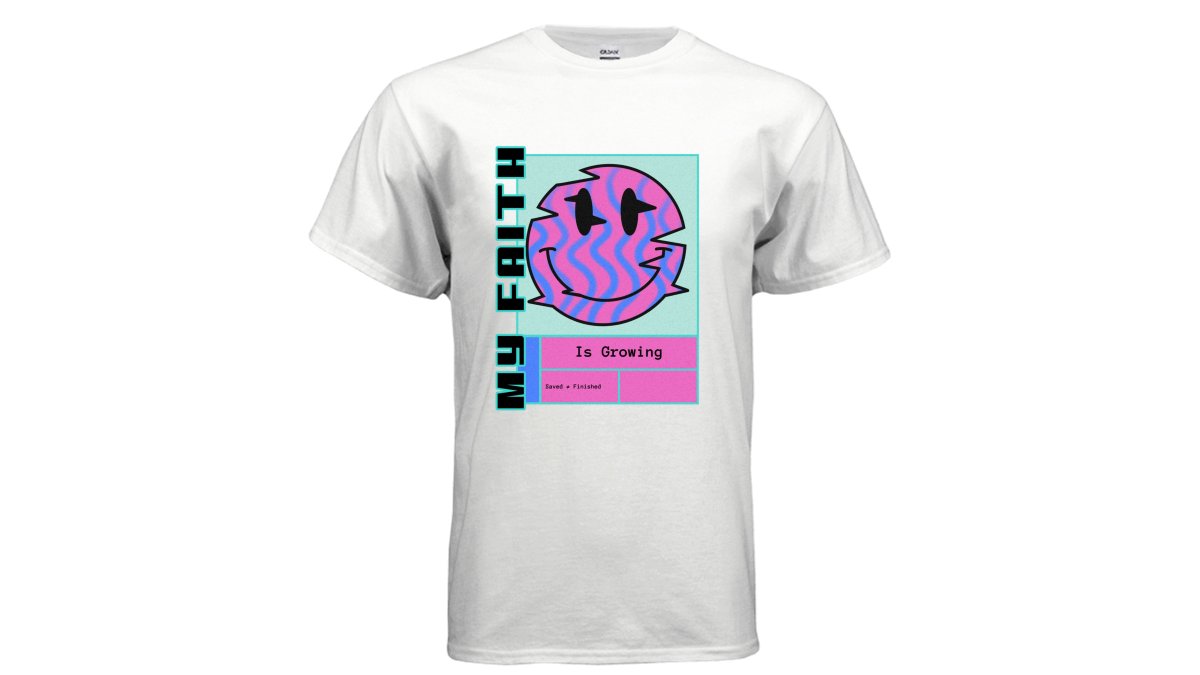
For faith-based professionals, subtlety is the tool, not the compromise. A My Faith Tee layered under a structured blazer works because the message appears when you move and stays quiet when you sit. Pair it with tailored trousers and clean sneakers or loafers, and the outfit reads professional first.
The professional gap most guides skip is that a crew-neck tee simply won't clear a business-formal or business-professional dress code. Rather than fight it, move the statement to a place the dress code allows:
- Under a buttoned shirt or blazer. The message shows at the collar and cuffs, not across the chest.
- A lapel pin, tie bar, or small embroidered mark. These read as accessories, not slogans, and they survive a dress-code review.
- A scarf, pocket square, or tote. Faith expression on a carried item is fully visible in the room and fully removable at the door.
- A quality knit or cardigan over a collared shirt. Warmer than a tee, dressier than a hoodie, and easy to layer under a coat.
Church and Everyday Looks
Church is the one setting where the message can lead. A statement tee with chinos or a midi skirt, or a faith-forward hoodie with clean denim, both work because the room expects the message. Everyday is where layering earns its keep: the same tee that reads bold at brunch tucks under an overshirt for a school pickup or a grocery run, so one piece covers three contexts.
A Quick Setting-by-Setting Check
- Business formal: accessory or hidden placement only; no visible graphic.
- Business casual: knit or cardigan over a collared shirt; small tonal mark is fine.
- Casual office: graphic tee under an open button-down or blazer.
- Church: statement piece leads; layer for warmth, not for cover.
- Everyday: one anchor piece, neutral everything else.
The through-line is placement, not volume. Knowing where a message can live in each room is what makes faith-based dressing practical instead of aspirational.
Build a Capsule Wardrobe That Reflects Your Values
A faith-aligned capsule wardrobe is a small, interchangeable set of pieces that all point in the same direction. The goal isn't minimalism for its own sake; it's stewardship. Fewer, better pieces you actually wear is a values decision as much as a style one.
Start with this structure:
| Category | How Many Pieces | Purpose |
|---|---|---|
| Statement tees | 3-4 | Carry the message |
| Neutral tops | 3-4 | Support the statement pieces |
| Bottoms | 3-4 | Denim, chinos, tailored trouser |
| Layers | 2-3 | Hoodie, overshirt, blazer |
| Shoes | 2 | One casual, one clean |
Fill the statement slots with pieces you'd wear weekly. A blessed Tee or a Faith Must Mature Tee earns its place if you reach for it without thinking. If a piece sits unworn for a month, it wasn't a conviction purchase; it was an impulse one.


Balance Boldness With Humility So You Never Come Off Preachy
Boldness and humility aren't opposites in faith-based fashion; they're a balance you manage. The shirt can be loud. Your delivery shouldn't be. Humility shows up in how you respond when someone asks, not in how quietly you dress.
What most guides miss is that the preachy feeling rarely comes from the garment. It comes from the wearer treating every glance as an invitation to lecture. A Truth over tee gives you the opening. What you do with it is the witness.
Shop Ethically: Where Faith and Sustainable Fashion Meet
Faith and sustainable fashion connect through stewardship: the belief that how a garment is made matters as much as what it says. Mindful consumption isn't a trend layered on top of faith-based fashion; it's the same conviction applied to the supply chain. Many shoppers now check fabric content and sourcing before they check the design.
That's where the products in our catalog do the work for you. The blessed Tee is made with sustainably and fairly grown USA cotton, and the Truth over tee uses the same 6 oz. USA-grown cotton construction. Both carry a tear-away label and a classic rib collar, so the comfort holds up past the first wash.
The My Faith Tee and Faith Must Mature Tee sit on a 5.3 oz. preshrunk cotton build, which keeps the fit predictable and the fabric durable. That's the practical side of values-based fashion: you shouldn't have to choose between a message you believe and a shirt that lasts.
For readers thinking about the broader ethical case, the Ellen MacArthur Foundation's work on circular fashion outlines how material choices and garment longevity reduce waste across the industry. the FTC's Green Guides also set the standard for how environmental claims can be marketed, which is worth knowing when you evaluate any brand's sustainability language.
The real challenge in faith-based fashion isn't finding a shirt with a message on it. It's building a wardrobe where every piece you reach for reflects a conviction you'd stand behind, in a boardroom, at church, and on a Tuesday afternoon.
That's the standard Saved, not finished was built around. Our faith-inspired apparel blends street culture with spiritual expression, with designs meant to spark curiosity and connect you with your community rather than shout over it. Every piece is made to be worn daily and built to last, so your wardrobe can carry the message without you having to force it.
Get started with Saved, not finished and build a rotation that makes your faith part of an everyday statement.
Frequently Asked Questions
What are some examples of clothes that make a faith statement?
Graphic tees with short scripture phrases or single words like 'blessed' or 'truth over' do the heavy lifting because they are readable at a glance. Beyond tees, hoodies and sweaters with subtle cross motifs, verse references, or faith-based slogans work the same way. The key is a clear message paired with a silhouette you actually enjoy wearing. A $16 to $23 graphic tee from a faith-focused brand can start more conversations than an expensive outfit with no message at all.
How do I know these designs will actually start conversations and not just look like regular streetwear?
The message needs to be legible from a few feet away, so pick designs with bold, readable text rather than tiny script. Placement matters too: chest and back prints get noticed, small hem logos do not. When someone asks about your shirt, keep your first response short and warm, then let them lead. A simple 'it's a reminder I carry every day' opens the door without pressure. That approach turns a graphic tee into a genuine conversation starter through fashion.
How do I balance modern fashion trends with faith-based messaging?
Treat your faith piece as the anchor and build the rest of the outfit around it with neutral, current basics: straight-leg denim, clean sneakers, a plain overshirt. This keeps the look on-trend without competing with the message. Faith-based streetwear trends in 2026 lean toward relaxed fits and layered silhouettes, so a graphic tee under an open flannel or bomber fits right in. One statement piece per outfit is usually enough.
I'm worried faith apparel will feel too bold or preachy at work. What should I wear instead?
Go with subtle and small. A single-word tee layered under a blazer or a verse reference on a crewneck reads as personal style rather than a sermon. Save the large back prints for weekends and church. If your workplace leans conservative, keep the message visible only when you choose to reveal it, such as an undershirt or a small chest print. You control the volume of the statement.