
Table of Contents
- Step 1: Read the Fabric Label Before Anything Else
- Step 2: Compare the Softest T-Shirt Fabric Blends
- Step 3: Check Fit, Sizing, and Stitching for Real Comfort
- Step 4: Judge Graphic Durability and Print Method
- Step 5: Learn How to Style Christian Graphic Tees
- Step 6: Follow Durable Graphic Tee Care Tips
- Step 7: Vet the Store and Compare Prices
- Conclusion
- Frequently Asked Questions
Last Updated: September 17, 2026
Step 1: Read the Fabric Label Before Anything Else
The fastest way to find comfortable christian graphic tees is to flip the tag and read the fiber content before you look at the design. Cotton content, fabric weight, and construction decide how a shirt feels after five washes, not the graphic on the front.
A cotton-blend mixes cotton with polyester or rayon. It resists wrinkles and shrinks less, but it traps heat and pills over time. 100% cotton breathes better, takes screen printed and direct-to-garment ink more cleanly, and softens with every wash. For everyday wear, most people land on cotton or a cotton-heavy blend.
The label also tells you the fabric weight, measured in ounces per square yard or GSM (grams per square meter). A 6 oz. shirt feels substantial and holds its shape. Anything under 4.5 oz. tends to go sheer and cling.
Step 2: Compare the Softest T-Shirt Fabric Blends
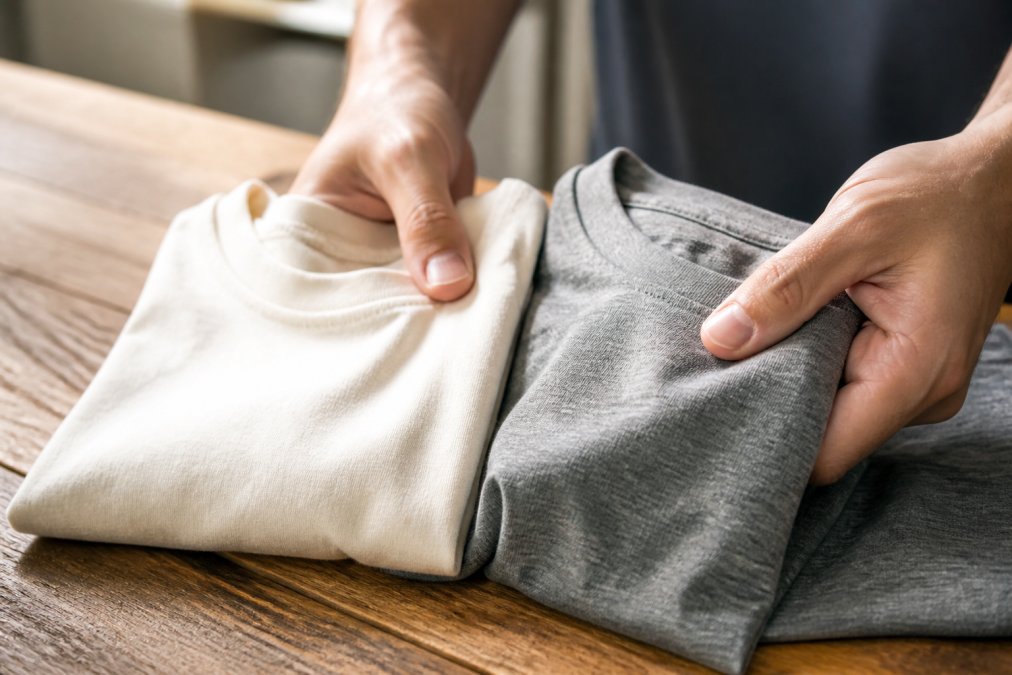
The softest t-shirt fabric blends start with ring-spun cotton, where fibers are twisted continuously to remove short strands and create a smoother, stronger yarn. Combed cotton goes a step further, removing impurities and short fibers before spinning for an even soft-hand feel. The difference is measurable: ring-spun yarn has a higher twist-per-inch count than standard open-end cotton, which is why it pills less and feels smoother against skin.
Here's how the common options compare:
| Fabric | Feel | Breathability | Durability | Best For |
|---|---|---|---|---|
| 100% ring-spun cotton | Soft, smooth | High | High | Everyday wear |
| Combed cotton | Very soft | High | Medium | Sensitive skin |
| 50/50 cotton-poly | Smooth, slick | Medium | High | Athletic use |
| 60/40 cotton-poly | Soft | Medium | High | Budget basics |
| Tri-blend | Drapey, stretchy | Medium | Medium | Fashion fits |
Why GSM Matters More Than the Word 'Soft'
Most product pages describe a shirt as "soft" without telling you anything useful. Fabric weight, measured in ounces per square yard or GSM (grams per square meter), is the number that actually predicts how a shirt will feel and wear. As a rough guide:
- Under 4.5 oz. (about 150 GSM): Lightweight, often sheer, prone to clinging. Common in promotional tees.
- 5.0-5.5 oz. (about 170-185 GSM): Midweight, the standard for most retail graphic tees.
- 6.0 oz. and up (about 200+ GSM): Substantial, opaque, holds its shape through repeated washing. This is the range most people describe as "premium."
A heavier shirt is not automatically more comfortable, a 7 oz. tee can feel hot in summer, but it will drape better, hide more underneath, and survive more wash cycles before thinning. When a listing gives you GSM or ounces, you can compare two shirts objectively instead of trusting adjectives.
Sensitive Skin and Allergy Considerations
For sensitive skin, 100% cotton usually wins because it lacks the polyester that traps sweat and can trigger irritation. A few specifics worth knowing:
- Tear-away labels matter more than most shoppers realize, the tag, not the fabric, is often the source of neck irritation.
That combination, a tear-away label, is what makes a shirt genuinely breathable fabric on humid days rather than just marketed that way.
Step 3: Check Fit, Sizing, and Stitching for Real Comfort
A comfortable shirt fits at the shoulders, not just the chest. The shoulder seam should sit at the edge of your shoulder bone, not hang past it. If it droops, the shirt will pull across the chest all day.
Relaxed fit and retail fit describe two different cuts. Relaxed adds room through the body and sleeves. Retail follows the body closer, closer to a standard crew neck tee. Neither is better; pick based on how you layer.
Check the stitching before you commit:
- Double-needle sleeve and bottom hems resist unraveling
- Taped neck and shoulders stop the collar from stretching
- Seamless double-needle 7/8" collar keeps its shape after washing
- A tear away label prevents neck irritation
How to Use a Sizing Chart Without Guessing
Measure a shirt you already own and love, then match those numbers to the sizing chart. Lay it flat, measure pit to pit for width and collar to hem for length, and compare. This beats guessing your size from a model's height.
Unisex sizing runs wider in the shoulders than women's cuts, so many shoppers size down. When between two sizes, size up for cotton, since 100% cotton still relaxes slightly.
Step 4: Judge Graphic Durability and Print Method
Graphic durability depends on the print method, not the design. Two techniques dominate, and they age, and feel, very differently against your skin.
How to Test a Print Before You Buy
You can't always feel a shirt before ordering online, but you can read the listing and inspect the shirt when it arrives:
- Stretch test: Gently pull the fabric across the print. A well-cured print flexes with the cotton. If the ink cracks instantly or feels like a plastic sheet, expect early wear.
- Thickness test: Run a fingernail lightly across the graphic. Screen prints feel raised; DTG feels nearly flush with the fabric.
- Edge test: Look at the border of the design. Crisp, clean edges suggest a properly cured print. Fuzzy or bleeding edges suggest under-curing or a low-quality file.
- Wash test: After the first wash, check for flaking along the edges. Flaking is the earliest sign of a print that will fail within a few months.
Matching Print Method to How You'll Wear It
A well-cured print on a 6 oz. ring-spun cotton tee is the combination that survives the most washes while still feeling comfortable against the skin. Print method and fabric weight work together, a heavy print on a thin shirt will feel worse than the same print on a substantial one.
Step 5: Learn How to Style Christian Graphic Tees
Styling christian graphic tees well comes down to contrast. Let the shirt carry the message and keep everything else simple.
- Pair a bold graphic with plain denim or neutral chinos
- Layer under an open flannel or denim jacket for cooler days
- Tuck the front hem for a cleaner relaxed fit look
- Add clean sneakers and minimal accessories
- Roll the sleeves once to show the durable stitching
For a subtler look, choose smaller chest prints or single-word designs. For a conversational statement, go full-back graphics. Brands like Saved, not finished build their line around this idea: designs meant to spark curiosity and spark meaningful conversations.
Step 6: Follow Durable Graphic Tee Care Tips
The right durable graphic tee care tips add years to a favorite shirt. Wash inside out in cold water, and skip the dryer when you can.
- Turn the shirt inside out before washing
- Use cold water on a gentle cycle
- Avoid fabric softener, which breaks down print ink
- Hang dry or tumble on low heat
- Never iron directly over the graphic
Following these keeps wash-fastness intact and stops the print from cracking. Most graphic tees fail because of heat, not wear.
Step 7: Vet the Store and Compare Prices
A trustworthy store shows real product photos, a clear sizing chart, and customer reviews you can verify. If a shop hides its return policy or uses only stock images, treat that as a warning sign.
Compare prices against fabric quality. A 6 oz. 100% cotton tee costs more to make than a thin poly blend, so a slightly higher price often reflects better materials. Saved, not finished prices its blessed Tee at $23.13 and its Saved but Tee, Not Perfect Tee, and Truth over tee at $18.98 each, all on 6 oz. 100% cotton. That is a fair benchmark for a premium quality tee.

Conclusion
Finding a shirt that feels good and says something takes a few extra minutes of label-reading, but the payoff is a wardrobe staple you actually reach for. Start with 100% cotton or a cotton-heavy blend, verify the stitching, and match the print method to how you wash.
Saved, not finished makes that choice easier with faith-inspired apparel built on 6 oz. 100% USA cotton, double-needle sleeve and bottom hems, and taped neck and shoulders. Every design is made to start conversations and wear well past the first wash. Shop now and wear your faith with confidence.
Frequently Asked Questions
What fabric blends are most comfortable for Christian graphic tees?
Look for 100% cotton. For sensitive skin, 100% cotton is often the safest choice because it breathes and avoids synthetic irritation.
How can I tell if a Christian graphic tee will be soft before buying?
Check the fabric weight and fiber type in the product description. Tees around 6 oz per square yard in 100% USA cotton tend to feel softer than heavier, standard cotton. Reading customer reviews that mention comfort level and wash-fastness gives you real-world feedback before you spend money.
How should I care for my graphic tees to keep them comfortable?
Wash graphic tees inside out in cold water on a gentle cycle, then tumble dry low or hang to dry. Avoid high heat, which breaks down fibers and cracks designs. Following durable graphic tee care tips like these protects the soft-hand feel and keeps vibrant prints from fading, so the shirt stays comfortable for years.
Do Christian graphic tees actually start conversations?
Yes, when the design is clear and readable. A bold message on a quality tee acts as a natural conversation starter, especially in casual settings. The key is choosing a design that reflects your personal style, whether subtle or statement-making, so you feel confident wearing it. When people ask about the message, you get an easy opening to share your faith without forcing the topic.
This guide was created by Saved, not finished to help you shop smarter for faith-based apparel.