
Table of Contents
- What Evangelism Fashion Is and Why It Works
- Step 1: Start With Conviction, Not a Costume
- Step 2: Choose Faith-Based Clothing Brands That Fit Your Style
- Step 3: Learn How to Start Conversations About Faith
- Step 4: Build a Wardrobe With Christian Streetwear Style Tips
- Step 5: Take Your Witness Digital and Keep It Ethical
- Common Mistakes Beginners Make With Evangelism Fashion
- Frequently Asked Questions
Last Updated: September 26, 2026
What Evangelism Fashion Is and Why It Works
Evangelism fashion is the practice of wearing clothing that openly shares your faith, turning everyday outfits into a quiet form of witness. It works because people read what you wear before you say a word. At Saved, not finished, we build faith-based apparel for exactly this purpose: tees, hoodies, and sweaters that start conversations without you forcing one.
The Difference Between Wearing a Message and Preaching One
A shirt that says "Blessed" is not a sermon. It is an invitation.
Step 1: Start With Conviction, Not a Costume
The biggest mistake beginners make is treating faith apparel like a costume. They wear it for church events and nothing else. Then it feels fake.
Here is a simple way to start:
- Write down one truth you want to share with others
- Pick one word or phrase that captures it
- Choose a design that matches, not one that shocks
Step 2: Choose Faith-Based Clothing Brands That Fit Your Style
Faith-based clothing brands are companies that design apparel around spiritual messages, verses, or themes. The best ones blend that message with real style, so the piece works in your actual wardrobe. But for a beginner, the harder question is not just whether the shirt looks good. It is whether the shirt was made in a way that agrees with the message printed on it.
The Questions Worth Asking Before You Buy
- Where was the cotton grown? Brands that use USA-grown cotton can usually name the source. That matters because American cotton is subject to domestic labor and environmental rules that many overseas sources are not.
- Who sewed it? Look for a named factory, a partner list, or a fair-labor certification. If a brand cannot tell you where the shirt was assembled, that silence is the answer.
- What is the fabric weight? A 6 oz. cotton tee holds its shape and lasts longer than thin alternatives. Heavier cotton also means fewer replacements, which is the quietest form of sustainability there is.
- Does the size range include real bodies? A brand that runs from small to 5XL serves more people and signals that the message is for everyone, not just one body type.
- What is the return policy? You should be able to send it back if the fit is wrong. A brand confident in its product will let you.
Why Ethical Sourcing Belongs in a Faith Wardrobe
The word "gospel" means good news. If the way a shirt is made is bad news for the people who made it, the shirt undercuts its own message. That is not a guilt trip. It is a simple alignment check.
A Quick Comparison Table
| What to Check | Why It Matters | Quick Test |
|---|---|---|
| Fabric weight | Thin shirts fade and stretch fast | Look for 6 oz. cotton |
| Cotton source | Supports fair, sustainable farming | Check for USA-grown cotton |
| Factory transparency | Confirms labor conditions | Look for a named partner or certification |
| Design clarity | Message must read at a glance | View it from 6 feet away |
| Size range | Everyone deserves a real fit | Confirm small to 5XL |
| Price fit | Faith wear should not break your budget | Compare cost per wear |
Saved, not finished checks these boxes. The blessed Tee is made from 6 oz. 100% USA cotton, with a tear-away label and a classic width, rib collar. The Truth over tee uses the same build. Both come in sizes from small through 5XL.


Step 3: Learn How to Start Conversations About Faith
Learning how to start conversations about faith gets easier when the shirt does the first move. Your job is to be ready, not pushy.
What to Say When Someone Asks About Your Shirt
Try a simple three-part reply:
- Answer plainly. "It's a reminder that God isn't finished with me yet."
- Add one personal line. "That idea got me through a hard year."
- Leave the door open. "Happy to tell you more sometime."
Then stop. Let them decide if they want more.
A common mistake is treating every question as a debate invitation. It is not. Some people are just curious. Some are being kind. Read the moment and match its energy.
Step 4: Build a Wardrobe With Christian Streetwear Style Tips
Christian streetwear style tips come down to one rule: treat faith pieces like any other streetwear, then style them with intention.
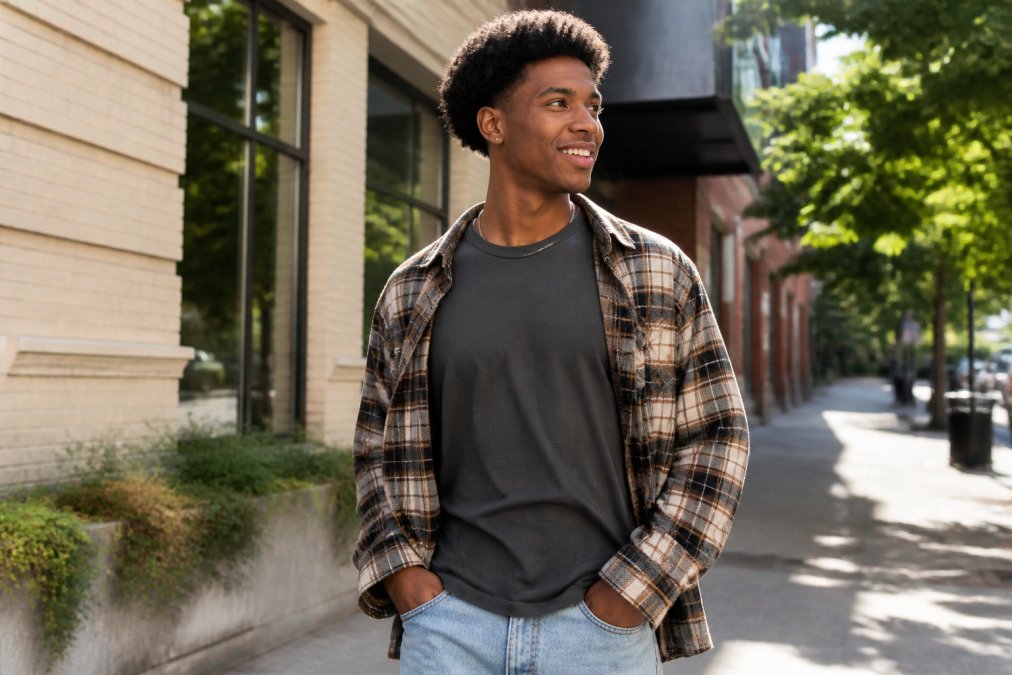
Wardrobe curation beats a big haul. Start with these basics:
- Two or three message tees in neutral colors
- One hoodie for cooler days
- One overshirt or flannel to layer over them
- Dark denim or joggers that let the shirt stand out
Step 5: Take Your Witness Digital and Keep It Ethical
Digital evangelism through fashion is the newest part of this practice, and it is the one most beginners underestimate. A single photo of your outfit can reach people you will never meet in person. That is either an opportunity or a trap, depending on how you use it.
How to Post Without Turning Into a Billboard
The pattern that works is simple: post the outfit, not the pitch. A clear photo in natural light. A short caption about what the message means to you. No hard sell, no countdown timers, no "link in bio or you're missing out." People respond to honesty and scroll past pressure.
- Show the shirt in context. A photo of you living your normal life reads as a testimony. A flat-lay product shot reads as a store.
- Write one true sentence. "This one got me through a hard year" does more than three paragraphs of theology.
- Reply to comments like a person. A short, warm answer keeps the door open. A copy-pasted verse dump closes it.
- Post consistently, not constantly. One or two honest posts a week beats a daily flood.
The Ethical Check You Can Do From Your Phone
Ethical sourcing belongs here too, and it is easier to verify than most beginners assume. Ask where the cotton comes from and how the shirt was made. The Saved but Tee uses sustainably and fairly grown USA cotton, and Gildan's process uses 45% renewable energy. That is a claim you can repeat without wincing.

Inclusivity Is Part of the Witness
Inclusivity matters as well. Faith wear should fit every body. A brand that stops at XL is leaving people out. Look for full size runs and designs that work across styles, skin tones, and cultural contexts.
The Trade-Off to Expect
Digital reach is wider than a conversation in a checkout line, but it is also shallower. A hundred likes is not a hundred conversations. The beginners who do this well treat the post as the introduction and the DM or comment thread as the actual conversation. The shirt starts it. You still have to show up.
Common Mistakes Beginners Make With Evangelism Fashion
The first mistake is buying a shirt you would never wear without the message. If the cut or color does not fit your style, the piece sits in a drawer.
A few more to avoid:
- Wearing faith wear only to church events
- Ignoring fabric quality and replacing shirts every few months
- Posting online without ever talking to a real person
- Assuming everyone who looks is judging you
Frequently Asked Questions
What is evangelism fashion?
Evangelism fashion is the practice of wearing clothing with faith-based messages, symbols, or scripture as a way to share the gospel through everyday style. Instead of handing out tracts or starting a formal conversation, you wear your testimony. A shirt that reads 'Truth Over' or 'God's Not Done' invites curiosity, and that curiosity creates an opening to talk about what you believe. It works because it is passive until someone asks, then it becomes personal.
How do I start sharing my faith through my personal style?
Begin with one piece you actually enjoy wearing, such as a tee from a faith-based clothing brand that matches your everyday look. Wear it somewhere routine: class, the gym, a coffee shop. When someone comments on the design, answer honestly and briefly about why it matters to you. You do not need a script. A simple 'It reminds me that God is not finished with me' does more than a rehearsed pitch, because it sounds like a real person.
Is wearing faith-based apparel considered evangelism?
It can be, but the clothing itself is not the evangelism. The apparel starts the conversation; you carry it. Faith-based apparel works as a conversation starter because it makes your beliefs visible in a setting where they would otherwise stay private. What turns a shirt into evangelism is your willingness to answer when someone asks. Without that, it is just a design. With it, a $13.90 tee can open a door.
How does faith-inspired clothing spark meaningful conversations?
Faith-inspired clothing sparks conversations because it creates a low-pressure opening. People ask about a design before they ask about your beliefs, which gives you control over how deep the conversation goes. That matters for introverts especially: the shirt does the first sentence for you. From there, you can keep it short or go deeper depending on the moment. The message-driven design does the introducing, and you decide how far to take it.
Sharing your faith through what you wear takes courage, and it takes the right pieces. Saved, not finished builds faith-inspired tees, hoodies, and sweaters that blend street culture with spiritual expression, so your outfit can open doors you might not open alone. Every design is made to spark curiosity, from clear message tees to subtle everyday staples. Get started with Saved, not finished and wear your convictions with confidence.