
Table of Contents
- What Makes a Hoodie Comfortable for Everyday Wear
- Understanding Hoodie Fit: Regular, Slim, and Oversized Options
- Best Fabric for Everyday Hoodies: Material Quality and Weight
- Construction Quality: Seams, Cuffs, and Durability
- Breathability, Warmth, and Thermal Regulation
- How to Care for Your Hoodies to Keep Them Soft
- Styling and Versatility for Daily Wear
- Frequently Asked Questions
Last Updated: October 2, 2026
What Makes a Hoodie Comfortable for Everyday Wear
When you're choosing comfortable hoodies for everyday wear, comfort isn't just about how soft the fabric feels in the moment. It's about how that hoodie performs across dozens of washes, how it moves with your body during a long day, and whether it stays true to its original fit and feel. At Saved, not finished, we understand that comfort is the foundation of any piece you'll actually reach for every single day.

True comfort comes from the intersection of three factors: fabric quality, construction integrity, and fit precision. A hoodie might feel luxurious in the store but pill after five washes. Another might have perfect fabric but seams that fray or a hood that doesn't stay in place.
The difference between a hoodie you'll wear constantly and one that ends up in the back of your closet often comes down to details most people overlook: GSM (grams per square meter) weight, seam construction quality, how the ribbed cuffs are reinforced, and whether the fabric composition truly delivers on breathability without sacrificing warmth. These specifics matter because they determine whether your hoodie stays comfortable after 50 washes or 150 washes.
Understanding Hoodie Fit: Regular, Slim, and Oversized Options
Fit is where most people make their first mistake when choosing comfortable hoodies for everyday wear. They either chase whatever trend is popular that season or pick a size based on a single try-on moment.
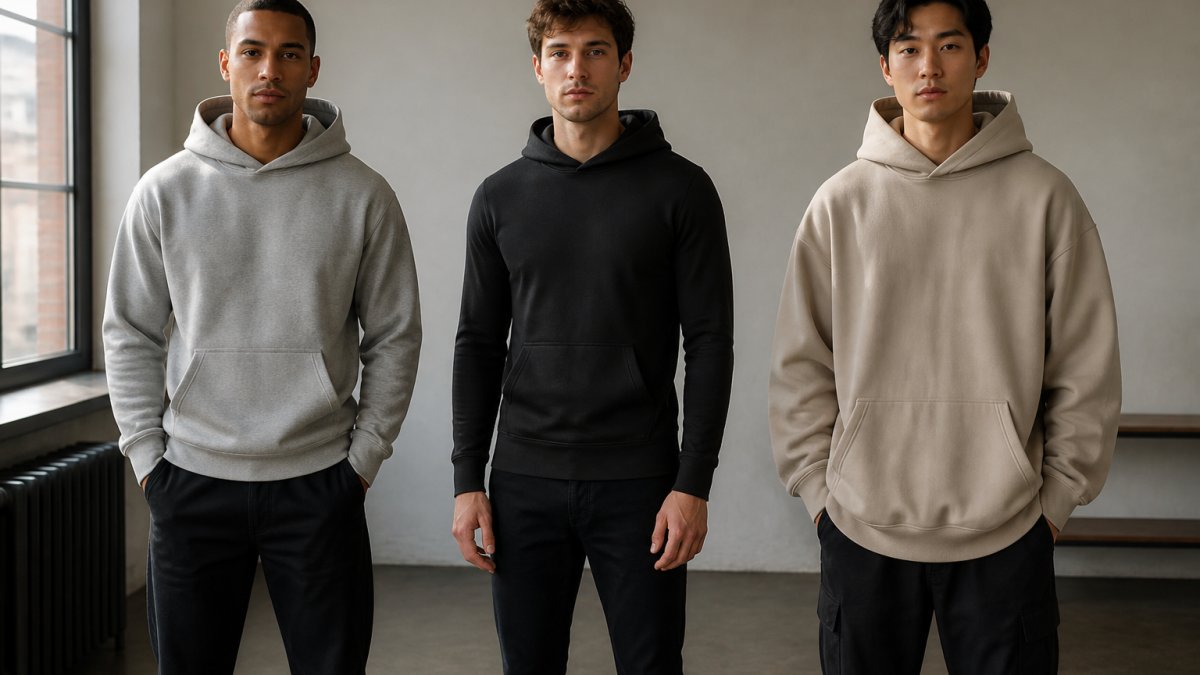
Regular fit is the foundation most people should start with.
Slim fit hoodies taper closer to your body, especially through the torso and sleeves. If you're lean or prefer a more tailored silhouette, this works.
Oversized fit has become the default for certain communities and aesthetics. The appeal is real, there's genuine comfort in excess fabric that doesn't cling. But oversized comes with hidden costs.
Finding Your Fit
The most practical approach: order two sizes and compare them side by side at home. One should be your typical size, one half-size up. Wear each for an hour, not just five minutes. Move around, sit down, reach for things. Your real fit preference emerges after living in the hoodie briefly, not from a mirror check.
Pay attention to sleeve length specifically. Sleeves should end at your wrist bone when your arms are relaxed at your sides. If they cover your hand or leave a gap above your wrist, the fit isn't right regardless of how the rest of the hoodie feels. Sleeve length affects how the hoodie functions in layering and everyday movement.
Best Fabric for Everyday Hoodies: Material Quality and Weight
The fabric you choose determines almost everything about how your hoodie performs. This is where quality separates hoodies that last from ones that deteriorate within a season.
Cotton-polyester blends are the industry standard for good reason. Pure cotton hoodies offer breathability and comfort but tend to shrink unpredictably and lose shape faster. Pure polyester performs better mechanically but can feel plasticky and trap moisture.
The Saved, not finished hoodies use a 50% cotton, 50% polyester blend (with heather sport colors at 60% polyester, 40% cotton). This composition is specifically chosen because it delivers genuine everyday comfort: the cotton breathes, the polyester holds the shape, and together they create a fabric that softens with wear rather than deteriorating.
Understanding GSM and Fabric Weight
GSM, grams per square meter, is the metric that actually tells you how substantial a fabric is.
Lightweight hoodies (under 250 GSM) are thin, breathable, and best for layering or warm weather. They're not ideal for everyday wear if you want durability, they pill more easily and lose shape faster.
Midweight hoodies (250-350 GSM) are the sweet spot for everyday wear. They're substantial enough to feel quality, durable enough for repeated washing, and still breathable enough for most climates.
Heavyweight hoodies (over 350 GSM) are genuinely warm but can feel stiff initially and take longer to break in. They're better for winter-specific wear than everyday rotation.
Cotton-Polyester Blends vs. Pure Cotton
The practical difference comes down to what you're willing to trade. Pure cotton feels slightly softer initially and breathes marginally better. But it shrinks unpredictably (even with cold water and air drying), loses elasticity faster, and pills more readily. After 20 washes, a pure cotton hoodie often looks noticeably older.
Cotton-polyester blends feel nearly identical to pure cotton after a few washes, maintain their shape through dozens of washings, and resist pilling significantly better. The polyester percentage (even at 50%) doesn't make the fabric feel synthetic if the blend is quality, it just makes it more practical.
Construction Quality: Seams, Cuffs, and Durability
Construction quality is where cheap hoodies fail and good ones endure.
Seam construction matters more than most people realize. Double-stitched seams (where the thread runs parallel to itself) hold better than single-stitched.
The hood itself deserves attention. A double-lined hood (where the interior and exterior are separate layers) holds its shape better and provides more structure than a single-layer hood.
Ribbed cuffs and waistbands take constant stress, your wrists bend, your torso flexes, the cuffs get pulled and stretched.
A pouch pocket is standard but often poorly constructed. Seams around the pocket opening can fray, and the pocket itself can separate from the body.
Breathability, Warmth, and Thermal Regulation
The tension between breathability and warmth is real, and choosing comfortable hoodies for everyday wear means understanding which matters more for your climate and use case.
Breathability comes primarily from fiber type and GSM. Cotton breathes better than polyester. Lighter weights breathe better than heavy ones.
Midweight cotton-polyester blends hit the balance point. They allow enough air circulation that you won't overheat indoors or during light activity, but they retain enough warmth for cool outdoor temperatures.
Moisture-wicking is often marketed heavily but matters less for hoodies than for athletic wear.
Thermal regulation, how the fabric responds to temperature changes, improves with wear. New hoodies feel slightly stiffer. After 5-10 washes, the fibers relax and the fabric becomes more responsive to your body temperature.
How to Care for Your Hoodies to Keep Them Soft
How you care for your hoodies after purchase determines whether they maintain comfort or deteriorate. Most people's washing habits actually damage their hoodies unnecessarily.
Washing, Drying, and Storage Best Practices
Wash in cold water. Hot water accelerates fiber breakdown and increases shrinkage risk, especially with cotton-polyester blends. Cold water cleans effectively and extends fabric life significantly.
Turn hoodies inside out before washing. This protects the outer surface from friction with other garments and reduces pilling.
Use gentle detergent and avoid fabric softener. Fabric softener coats fibers and reduces breathability over time. Gentle detergent is less harsh on the blend and preserves color better than standard detergent.
Air dry whenever possible. Machine drying creates friction that causes pilling and accelerates fiber breakdown. If you must machine dry, use low heat. Better yet, hang dry or lay flat.
Store hoodies folded, not hung. Hanging stretches the shoulders over time, especially with heavier midweight fabrics.
Styling and Versatility for Daily Wear
A comfortable hoodie earns its place in your rotation by working across multiple contexts. This is where choosing comfortable hoodies for everyday wear intersects with practical lifestyle fit.
The classic pairing, hoodie with jeans, works because the proportions balance naturally. The hoodie's casual structure complements denim's structure.
Layering multiplies a hoodie's utility.
Hoodies with distinctive designs or messaging, like those from Saved, not finished, add another dimension. A hoodie with intentional design becomes a conversation starter rather than background clothing.
The fit you choose affects styling flexibility. Regular fit works across body types and styling approaches. Slim fit limits layering and works best if your aesthetic specifically calls for a tailored silhouette.
| Styling Context | Best Fit | Layering Approach | Occasion |
|---|---|---|---|
| Casual everyday | Regular | Standalone or over t-shirt | Errands, hangouts, work (casual) |
| Streetwear aesthetic | Slim or oversized | Layered with statement pieces | Social events, photography |
| Active/athletic | Regular | Over base layer | Light activity, outdoor movement |
| Professional casual | Regular | Under blazer or overshirt | Business casual environments |
Frequently Asked Questions
What makes a hoodie comfortable for everyday wear?
A comfortable hoodie combines three key factors: fabric quality (a soft cotton-polyester blend with appropriate GSM weight), proper fit that allows movement without excess fabric, and solid construction with reinforced seams and ribbed cuffs. The best everyday hoodies use breathable materials that regulate temperature, maintain shape after washing, and feel soft against your skin without pilling or losing elasticity over time.
What's the best fabric for a comfortable, long-lasting hoodie?
A 50/50 cotton-polyester blend at 8 oz. (approximately 270 GSM) offers the ideal balance for everyday wear. Cotton provides breathability and softness, while polyester adds durability, shape retention, and resistance to shrinkage. This combination resists pilling, recovers well after washing, and maintains comfort through regular wear. Pill-resistant air jet yarn, and 1x1 rib with spandex in cuffs.
How should a comfortable hoodie fit for daily use?
Your everyday hoodie should have a classic or relaxed fit that allows full range of motion without excess fabric bunching. Sleeve length should reach your wrist when arms are at rest, and the body should be wide enough to layer without pulling at seams. A double-lined hood with a color-matched drawcord. Check measurements before buying, body width, sleeve length, and overall length vary by size, so what fits in one brand may not fit in another.
How do I keep my hoodie soft and prevent shrinkage?
Wash in cold water on a gentle cycle to prevent shrinkage and fabric damage. Turn the hoodie inside out to reduce pilling. Use mild detergent and avoid fabric softener, which can reduce breathability. Air-dry flat or on a low heat setting rather than high heat, which degrades fibers and causes shrinkage. Store folded rather than hanging to prevent stretching at the shoulders. Proper care extends the life of your hoodie and keeps it feeling soft through dozens of washes.